
Amid the hustle of weeknight dinners, I’ve stumbled upon a gem that has transformed our family meals: Thai Peanut Chicken. The moment I whisked together the creamy peanut sauce, it filled my kitchen with a warm, inviting aroma that promised something special. This quick and easy recipe comes together in just 30 minutes, making it a fantastic go-to for anyone looking to elevate their dinner game without the stress. Plus, it’s wonderfully versatile! You can adjust the spiciness to suit your taste and even swap out the chicken for shrimp or tofu if you’re in the mood for a twist. Ready to dive into a plate of wholesome comfort? Let’s whip up this delightful dish together!
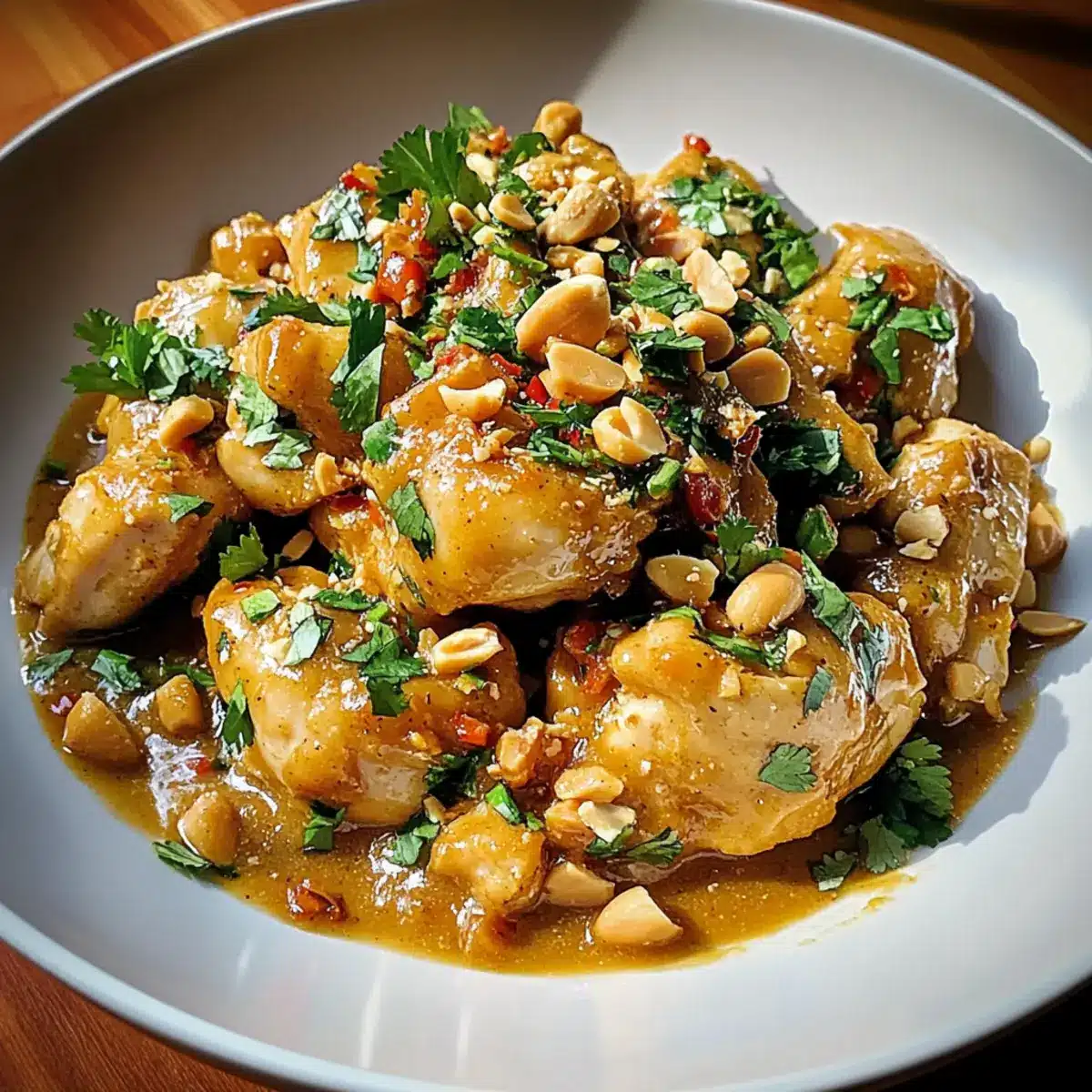
Why Is Thai Peanut Chicken a Must-Try?
Simplicity, this dish comes together in just 30 minutes, perfect for busy weeknights! Rich Flavor from the creamy peanut sauce makes each bite a delight. Customizable Spiciness lets you tailor the heat according to your preference. Versatile Substitute options, like using tofu or shrimp, cater to different dietary needs. Plus, it’s an impressively crowd-pleasing recipe, ideal for family dinners or gatherings alongside options like my Garlic Parmesan Chicken for a well-rounded feast!
Thai Peanut Chicken Ingredients
• Ready to create this delicious Thai Peanut Chicken? Let’s gather our ingredients!
For the Chicken
- Boneless Chicken Breasts or Thighs – These cuts ensure tenderness and juiciness in your dish.
For the Sauce
- Peanut Butter – The star of the dish, adding creaminess and rich flavor; substitute with sunflower seed butter for a nut-free option.
- Soy Sauce – Provides essential umami; opt for low-sodium soy sauce if you’re watching your sodium intake.
- Fresh Ginger – Adds a warm, zesty kick; if fresh isn’t available, ground ginger works in a pinch.
- Garlic – Fresh minced garlic elevates the aroma; garlic powder can be used but adjust to your taste.
- Sriracha – Adjust the heat to your liking; remove if you prefer a milder sauce.
For Cooking
- Vegetable Oil – Ideal for sautéing chicken; coconut oil or olive oil can be great alternatives.
Gather these ingredients, and you’re all set to embark on a delightful culinary adventure with Thai Peanut Chicken!
Step‑by‑Step Instructions for Thai Peanut Chicken
Step 1: Prep the Chicken
Begin by cutting 1 pound of boneless, skinless chicken breasts or thighs into bite-sized pieces, ensuring uniformity for even cooking. Season them lightly with salt and pepper to enhance the overall flavor. Set the chicken aside while you prepare the delectable peanut sauce, as a well-prepped chicken is key to a delicious Thai Peanut Chicken.
Step 2: Make the Peanut Sauce
In a medium mixing bowl, whisk together 1/3 cup peanut butter, 1/4 cup soy sauce, 1 tablespoon freshly grated ginger, 2 cloves of minced garlic, and 1 tablespoon of sriracha. Combine it into a smooth, creamy sauce—this combination will provide the rich and savory depth characteristic of Thai Peanut Chicken. Once prepared, set the sauce aside as you cook the chicken.
Step 3: Cook the Chicken
Heat 2 tablespoons of vegetable oil in a large skillet over medium heat. Once the oil shimmers, add the seasoned chicken pieces, cooking them undisturbed for about 3-4 minutes. Stir occasionally until the chicken is golden brown and cooked through, reaching an internal temperature of 165°F, which usually takes around 6-8 minutes total. This ensures you achieve a juicy and flavorful chicken base for your Thai Peanut Chicken.
Step 4: Combine Chicken and Sauce
Once the chicken is perfectly cooked, pour the prepared peanut sauce over it in the skillet. Stir well to ensure every piece of chicken is evenly coated with the rich, creamy sauce. Allow the mixture to cook for an additional 2-3 minutes, just until everything is heated through and the sauce is bubbling slightly. This step melds the flavors beautifully, creating a delightful dish.
Step 5: Serve and Garnish
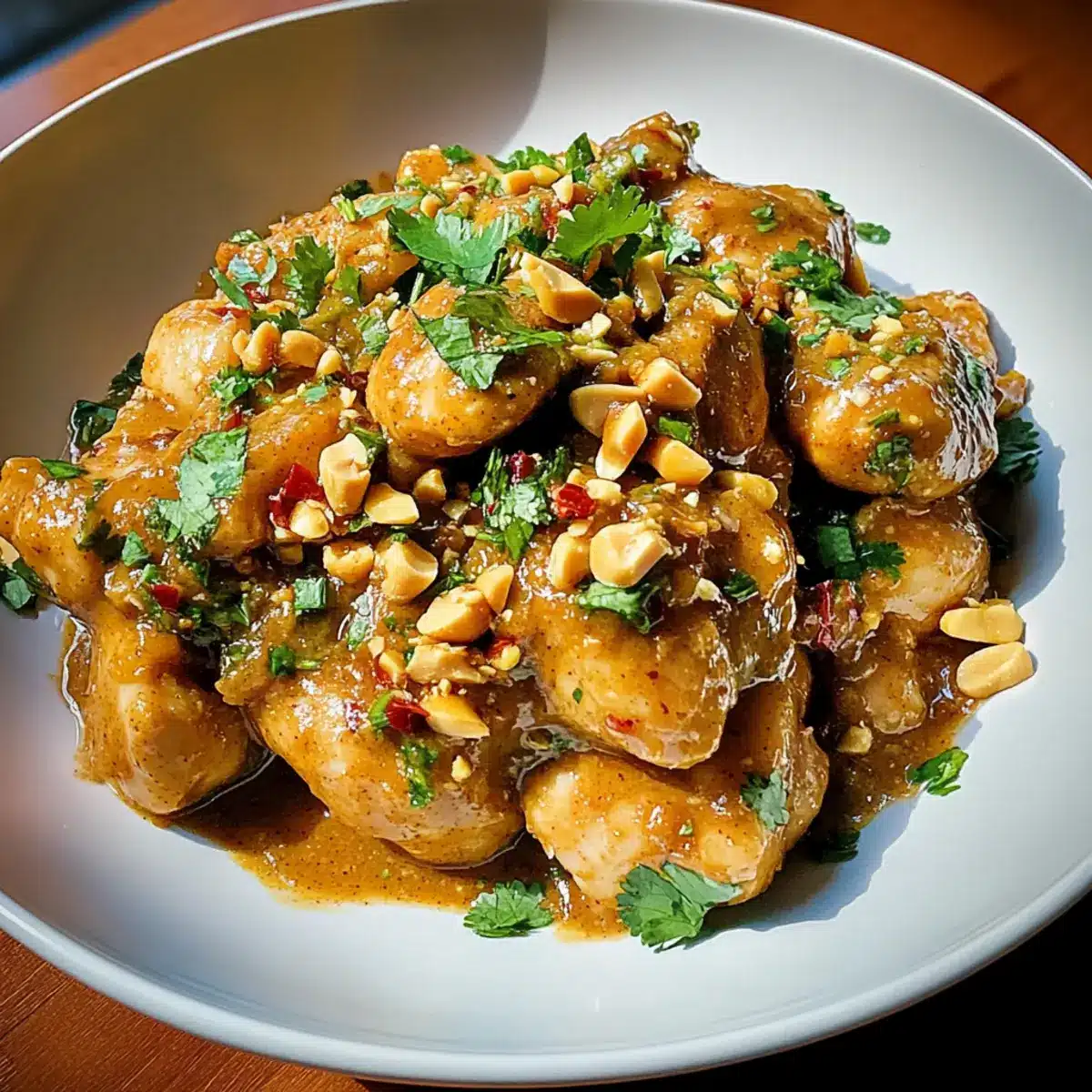
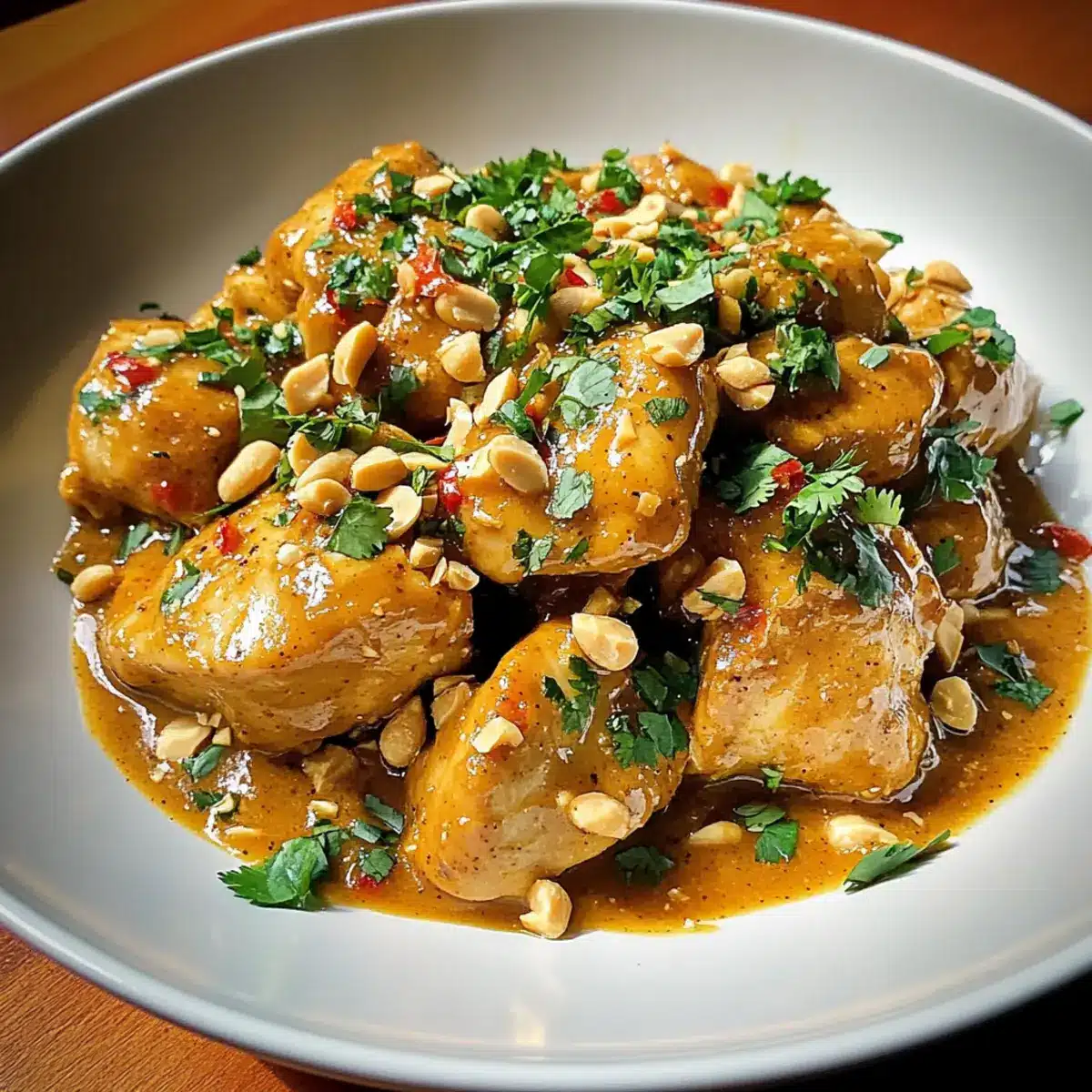
For the finishing touch, serve the Thai Peanut Chicken hot, garnished with chopped peanuts and fresh cilantro for added texture and brightness. You can pair it with jasmine rice, rice noodles, or even use it in lettuce wraps for a fresh twist. Each bite promises the comforting and satisfying taste of your new favorite meal!
Expert Tips for Thai Peanut Chicken
-
Uniform Chicken Pieces: Cut the chicken into even, bite-sized pieces for consistent cooking and tenderness throughout the dish.
-
Marinate for Flavor: If time allows, let the chicken marinate in the peanut sauce for at least 30 minutes. This enhances the depth of flavor.
-
Check Chicken Temperature: Use a meat thermometer to ensure the chicken reaches 165°F, avoiding overcooking and ensuring juiciness in your Thai Peanut Chicken.
-
Enhance Presentation: Don’t skip the fresh toppings of chopped peanuts and cilantro; they add not only flavor but also a delightful crunch.
-
Customize Spiciness: Adjust the amount of sriracha based on your heat preference. Start small and taste—it’s easier to add heat than to reduce it!
Thai Peanut Chicken Variations & Substitutions
Feel free to explore these delicious alternatives and make the dish your own!
-
Nut-Free Option: Swap peanut butter for sunflower seed butter or tahini for a creamy, nut-free sauce that still delivers on flavor.
This allows those with nut allergies to enjoy a similar texture without compromising taste and satisfaction. -
Protein Swap: Instead of chicken, use shrimp or tofu for a delightful twist.
Each option offers a unique flavor profile and complements the peanut sauce beautifully. -
Extra Veggies: Add a variety of colorful vegetables like broccoli, bell peppers, or snap peas for added nutrition and vibrancy.
It not only enhances the dish but also fills your plate with fresh textures, making each bite exciting. -
Fresh Citrus: Incorporate lime juice or zest before serving for a zesty brightness that elevates the flavors of the dish.
This refreshing addition can balance the richness of the peanut sauce, making it even more comforting. -
Creamy Coconut: For a tropical twist, mix in a splash of coconut milk into the sauce for a creamier and richer consistency.
This will turn your Thai Peanut Chicken into a luxurious dish worthy of a special occasion. -
Herb Infusion: Stir in fresh herbs like basil or mint to the finished dish for a fragrant and vibrant touch.
The addition of herbs not only enhances flavor but also gives the dish a fresh look and feel. -
Heat Adjustment: Adjust the level of sriracha to suit your heat preference—add more for spice lovers, or omit for milder palates.
This flexibility allows you to make the dish family-friendly while conversing on a spice scale.
For more inspiring ideas, consider trying my flavorful BBQ Chicken Mac for a cozy twist or the delightful Thai Peanut Chicken wraps for a fun twist on leftovers!
Make Ahead Options
These Thai Peanut Chicken preparations are perfect for busy home cooks looking to save time! You can marinate the chicken in the peanut sauce up to 24 hours in advance, ensuring that the flavors deepen beautifully. Additionally, you can prepare the peanut sauce and store it in the refrigerator for up to 3 days; just be sure to store it in an airtight container to maintain its richness. When you’re ready to cook, simply heat the oil in a skillet, sauté the marinated chicken, and follow the same finishing instructions by pouring the sauce over the chicken for a quick, mouthwatering meal that’s just as delicious as when made fresh.
What to Serve with Thai Peanut Chicken
The perfect dining experience awaits as you explore delightful sides that enhance the richness of this creamy dish.
-
Jasmine Rice: This fragrant rice is a classic pairing that soaks up the savory peanut sauce beautifully, offering a comforting starch.
-
Fresh Cucumber Salad: Crisp cucumbers tossed with rice vinegar and sugar provide a refreshing contrast to the rich, creamy chicken, balancing each bite perfectly.
-
Steamed Broccoli: The slight bitterness of steamed broccoli balances the sauce’s sweetness, adding a nutritious green element to your meal.
-
Peanut Noodles: Soft noodles tossed in a light peanut sauce echo the flavors of the chicken, creating a cohesive and satisfying dish.
-
Mango Sticky Rice: For a sweet finish, this tropical dessert of sweet coconut rice with ripe mango complements the savory main course perfectly and will make your meal feel special.
-
Herbal Iced Tea: A refreshing beverage option, this drink cools the palate, making it a lovely partner to the spicy notes from the Thai Peanut Chicken.
Each of these pairings enhances your meal, ensuring a delightful dining experience for you and your loved ones!
Storage Tips for Thai Peanut Chicken
- Fridge: Store leftovers in an airtight container in the refrigerator for up to 3-4 days. Make sure to let the dish cool before sealing to avoid condensation.
- Freezer: Freeze Thai Peanut Chicken in a freezer-safe container for up to 2-3 months. For best results, let it cool entirely before freezing to maintain flavor and texture.
- Thawing: When ready to enjoy, thaw in the refrigerator overnight. This allows for a gradual defrost that helps retain flavor.
- Reheating: Reheat in the oven at 350°F for 15-20 minutes or in the microwave on medium power for 2-3 minutes, stirring halfway through for even warming.
Thai Peanut Chicken Recipe FAQs
How do I choose ripe ingredients for Thai Peanut Chicken?
Absolutely! When selecting chicken, choose boneless, skinless breasts or thighs that are moist and firm to the touch, with no dark spots. For ginger, look for firm roots with a fragrant aroma—avoid any that are shriveled or moldy. Fresh garlic bulbs should feel heavy with tight skin and no sprouting. Use creamy peanut butter without added sugar for the best flavor.
What’s the best way to store leftover Thai Peanut Chicken?
Very! Store your Thai Peanut Chicken in an airtight container in the refrigerator for up to 3-4 days. Allow it to cool completely before sealing, as this prevents condensation, which can lead to soggy leftovers. If you need longer storage, consider freezing it.
Can I freeze Thai Peanut Chicken?
Definitely! To freeze, allow the dish to cool entirely, then transfer it to a freezer-safe container, making sure to leave a little space for expansion. Thai Peanut Chicken can be frozen for up to 2-3 months. When ready to enjoy, thaw it overnight in the refrigerator before reheating.
What are some common troubleshooting tips for cooking Thai Peanut Chicken?
If your sauce is too thick, gradually whisk in a little water or low-sodium broth until you reach your desired consistency. If the chicken comes out dry, double-check your cooking time; aim for 6-8 minutes, and always use a meat thermometer to ensure it hits an internal temperature of 165°F. Adjusting the sriracha according to your heat preference is also essential for achieving the perfect flavor!
Are there any dietary considerations for this recipe?
Absolutely! If you or your guests have nut allergies, substitute peanut butter with sunflower seed butter for a nut-free option. Additionally, you can switch out the chicken for shrimp, beef, or even tofu to cater to different dietary needs. Always check the ingredient labels if you’re concerned about soy or gluten in the soy sauce, as low-sodium versions often contain gluten.
Can I add vegetables to my Thai Peanut Chicken?
Yes, indeed! For an extra nutritious boost, add vegetables like diced broccoli, snap peas, or bell peppers during the cooking process. Simply stir them in when you add the sauce and cook until they’re tender but still colorful, usually about 2-3 minutes. This not only enhances the meal’s health quotient but also makes for a more vibrant presentation!
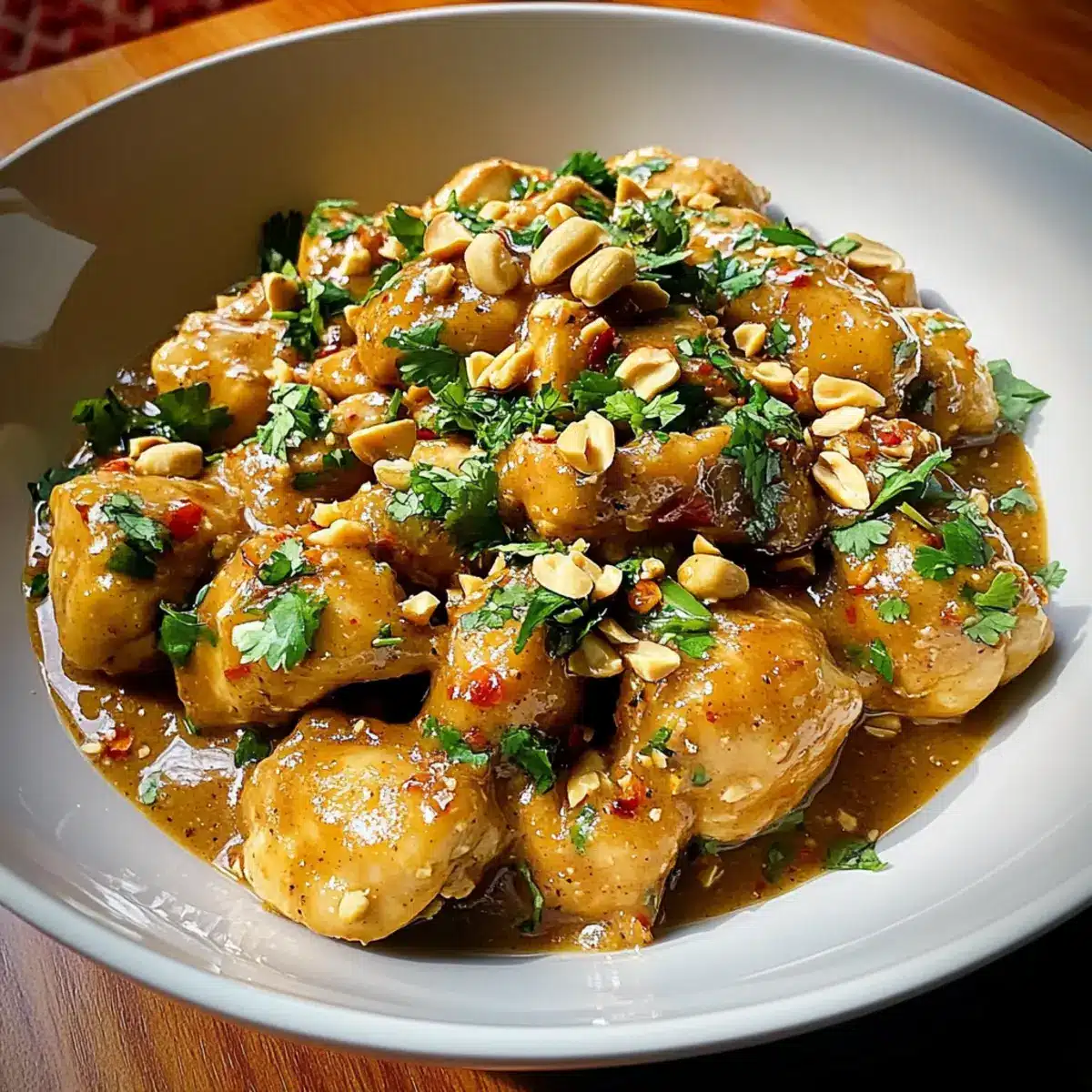
Thai Peanut Chicken Made Easy for a Flavorful Feast
Ingredients
Equipment
Method
- Prep the chicken by cutting it into bite-sized pieces and seasoning with salt and pepper.
- In a mixing bowl, whisk together peanut butter, soy sauce, ginger, garlic, and sriracha until smooth.
- Heat vegetable oil in a skillet and cook the chicken until golden brown and cooked through, about 6-8 minutes.
- Pour the peanut sauce over the chicken in the skillet and cook for an additional 2-3 minutes until heated through.
- Serve hot, garnished with chopped peanuts and cilantro, and pair with rice or noodles.
Leave a Reply