
The savory scent of baked eggplant and spiced ground meat fills the kitchen, instantly transporting me to sun-soaked Grecian landscapes. Today, I’m excited to share my take on the traditional Greek Moussaka—a comfort food that warms not just the belly, but also the heart. Layers of tender vegetables, hearty meat sauce, and a creamy béchamel come together to create a dish that’s perfect for family gatherings or a cozy night in. It’s freezer-friendly, making it a great meal prep choice, and while it may take some time to bake to perfection, the end result is always worth it. Ready to recreate this timeless classic in your kitchen? Let’s dive in!
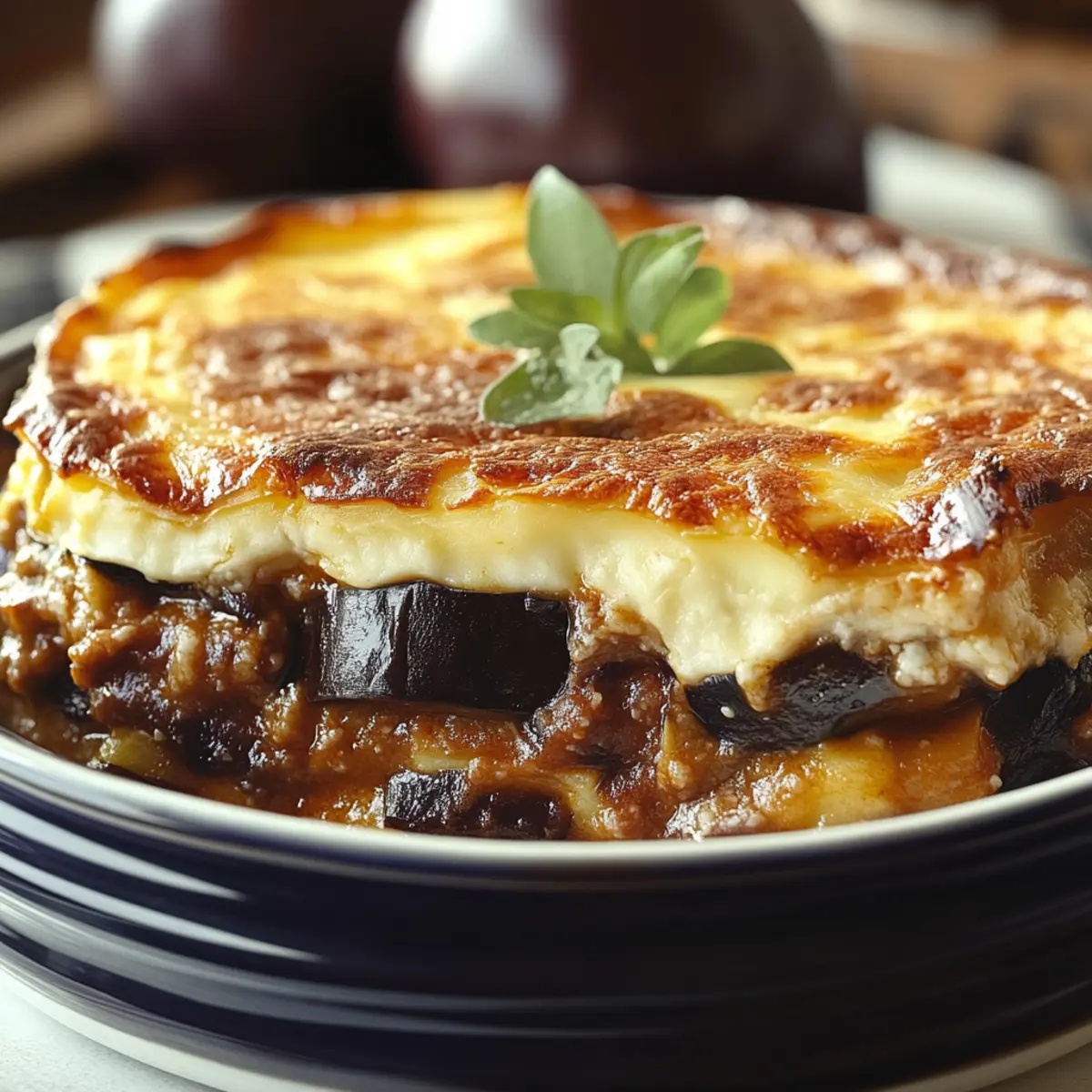
Why is Greek Moussaka a Must-Try?
Comforting Layers: This dish combines tender eggplant, hearty potatoes, and zesty meat sauce layered beautifully, making each bite a delightful experience.
Authentic Flavors: The warm spices and herbs, like cinnamon and oregano, deliver a genuine taste of Greece, sure to impress your family and friends.
Substantial Meal: Packed with protein and vegetables, Greek Moussaka offers a satisfying, nutrient-rich option that can easily replace your typical fast food.
Make-Ahead Friendly: Prepare this moussaka a day in advance for extra convenience; simply refrigerate and bake when you’re ready to enjoy a harmonious meal.
Crowd-Pleasing Delight: Whether it’s a family dinner or a gathering with friends, this dish guarantees smiles all around, reminiscent of Apple Cinnamon Greek treats shared during special occasions.
Greek Moussaka Ingredients
For the Vegetable Layers
• Eggplants – Essential for the vegetable base; soak and fry to enhance flavor. Choose firm, glossy ones.
• Potatoes – Provide heartiness and stability in layers.
• Zucchini – Adds texture and moisture; don’t skip this ingredient.
For the Meat Sauce
• Ground Meat (Beef or Lamb) – Use fresh, lean meat for depth; lamb is traditional, but beef works well too.
• Onion – Sweet red onions for balance and sweetness.
• Garlic – Fresh garlic gives an aromatic base.
• Crushed Tomatoes – Canned versions deepen the sauce’s flavor when simmered.
• Red Wine – Enhances richness and acidity in the meat sauce.
• Spices (Cinnamon & Nutmeg) – Key to providing authentic Greek flavor.
For the Herb Mixture
• Herbs (Oregano, Thyme, Parsley) – Add fresh Mediterranean notes that elevate the flavor profile.
For the Topping
• Cheese (Kefalograviera or Parmesan) – Provides a golden crust; fresh is best for that rich flavor.
• Béchamel Sauce Ingredients:
• Butter – The foundation for the béchamel; adds richness.
• Flour – Thickens the sauce, creating the perfect texture.
• Milk – Provides creaminess and body in the béchamel.
• Egg Yolks – Enrich the sauce for a silky finish.
• Nutmeg – A hint of nutmeg adds warmth; don’t skip this classic touch.
• Cheese – Stir in for added flavor and creaminess in the béchamel.
Each ingredient contributes to the overall deliciousness of this Greek Moussaka, ensuring that you enjoy every bite of this comforting dish!
Step‑by‑Step Instructions for Greek Moussaka
Step 1: Prepare Vegetables
Slice the eggplants, zucchini, and potatoes into ¼-inch rounds and lay them flat. Sprinkle salt on the eggplant slices, allowing them to sit for 30 minutes to draw out moisture and bitterness. Afterward, pat the eggplant dry with paper towels, ensuring they are ready for frying and will absorb flavors beautifully in the final Greek Moussaka.
Step 2: Fry Vegetables
In a large skillet, heat a generous amount of olive oil over medium heat until shimmering. Add the sliced vegetables in batches, frying until they turn a golden brown on both sides, about 3-4 minutes per side. Once fried, transfer the vegetables to paper towels to drain excess oil, which helps retain their flavor and texture for the moussaka layer.
Step 3: Cook Meat Sauce
In a saucepan, heat a splash of olive oil over medium heat and sauté the sweet red onions until they’re soft and translucent, roughly 5 minutes. Add minced garlic and cook for another minute before introducing the ground meat, allowing it to brown completely. Deglaze the pan with red wine, letting it simmer for 2-3 minutes, then stir in crushed tomatoes and spices. Let the sauce simmer for 10-15 minutes, stirring occasionally.
Step 4: Make Béchamel
In a separate saucepan, melt 4 tablespoons of butter over low heat, then whisk in 4 tablespoons of flour, cooking for 2 minutes without browning. Gradually add 2 cups of milk while constantly whisking to prevent lumps. Cook until the sauce thickens, about 5-7 minutes. Remove from heat and whisk in egg yolks, cheese, and a dash of nutmeg for added warmth, creating a silky béchamel for the Greek Moussaka.
Step 5: Layer Moussaka
In a well-greased baking dish, start layering your moussaka: place a layer of the hearty potatoes on the bottom, followed by a layer of crispy eggplant, then zucchini, and lastly the savory meat sauce. Repeat the layers until all ingredients are used, finishing with a generous layer of béchamel sauce on top, ensuring it covers the entire dish beautifully.
Step 6: Bake
Preheat your oven to 165°C (330°F). Carefully place the assembled Greek Moussaka in the oven and bake for 40-45 minutes, or until the top is golden brown and bubbling. Keep an eye on it during the last few minutes for that perfect color and texture.
Step 7: Rest
Once baked, remove the moussaka from the oven and let it rest for 30 minutes before slicing. This cooling period allows the layers to set and makes serving easier, ensuring that each slice maintains its shape and showcases the delicious layers of vegetables and meat within.
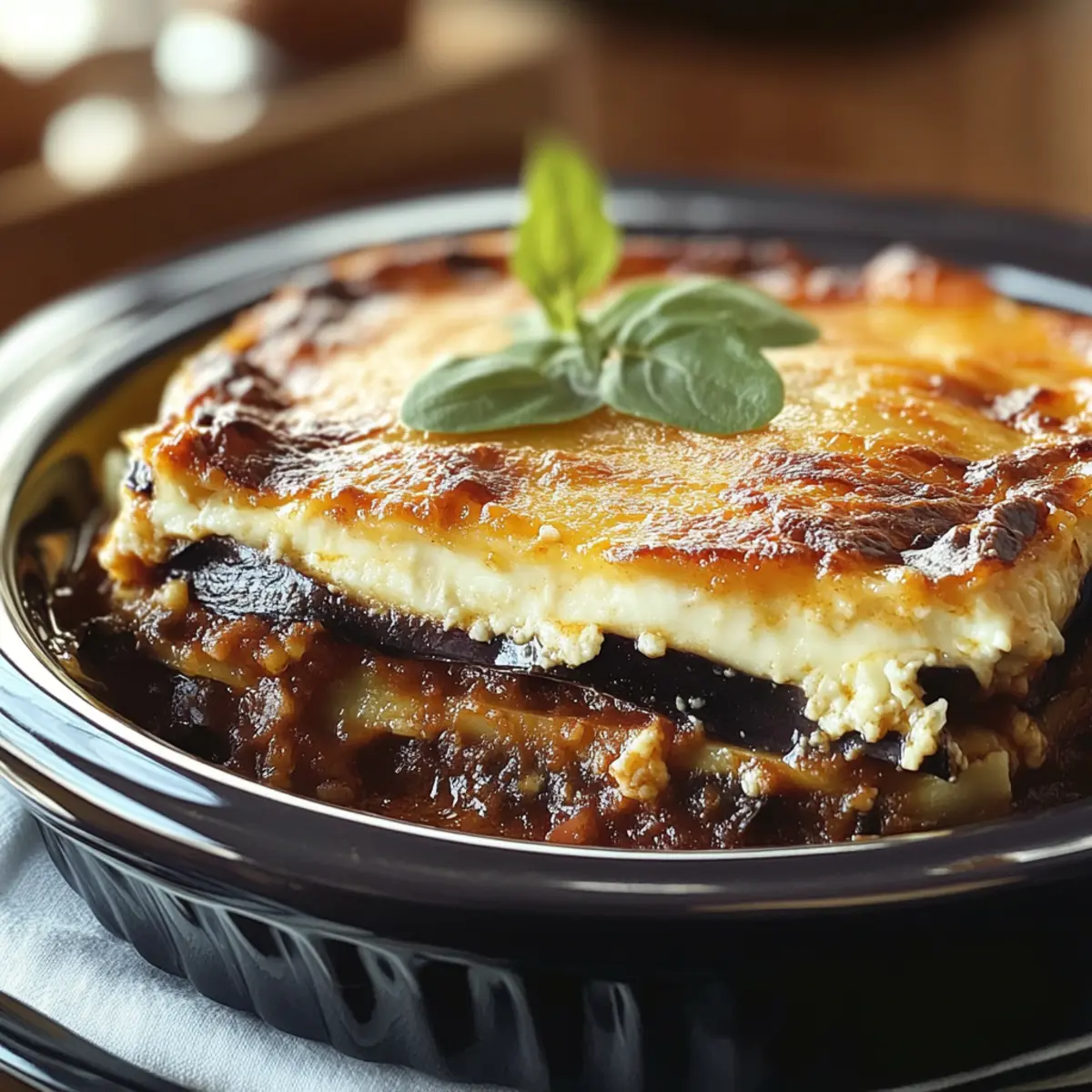
Greek Moussaka Variations & Substitutions
Feel free to elevate your Greek Moussaka experience with these delightful twists and alternatives that cater to different tastes and dietary needs!
- Lamb or Beef: Swap ground beef for ground lamb for an authentically rich flavor profile. Each bite bursts with traditional Mediterranean essence.
- Vegetarian Delight: Use lentils or chickpeas in place of meat for a wholesome vegetarian take that still delivers on heartiness. Try adding extra herbs for freshness!
- Dairy-Free: For a dairy-free béchamel, blend soaked cashews with plant-based milk and nutritional yeast for a creamy, flavorful sauce that fits your dietary needs.
- Zesty Kick: Add a pinch of red pepper flakes for a touch of heat, invigorating the dish with a Mediterranean spice that tantalizes the taste buds.
- Cheesy Choices: If you can’t find Kefalograviera, substitute with mozzarella or a sharp cheddar to create a gooey, delicious topping on your moussaka.
- Herb Infusion: Infuse the meat sauce with fresh basil or dill for an aromatic twist that adds complexity to the traditional flavors.
- Extra Veggies: Layer in some chopped spinach or bell peppers for added nutrition and color, creating a beautiful display of flavors and textures.
- Moussaka Muffins: For a fun twist, consider making individual moussaka muffins! Layer the ingredients in a muffin tin and bake for fun, portion-controlled servings perfect for meals on the go.
With these suggestions, personalizing your beloved Greek Moussaka is easier than ever. If you’re also interested, give my delightful Apple Cinnamon Greek muffins a try for a tasty dessert pairing, or explore the flavorful Greek Chicken Tenders for a complete meal! Enjoy your culinary adventure!
Make Ahead Options
These Outrageously Delicious Greek Moussaka are perfect for busy home cooks looking to save time without sacrificing flavor! You can assemble the entire moussaka up to 24 hours in advance; simply layer all your vegetables, meat sauce, and béchamel in a baking dish, then cover with plastic wrap and refrigerate. To maintain the quality, ensure the dish is tightly sealed to prevent drying out. When you’re ready to enjoy, just pop it in a preheated oven at 165°C (330°F) and bake for 40-45 minutes until golden and bubbling. This preparation method not only enhances the flavors but also allows for a hassle-free meal on your busy weeknight!
Expert Tips for Greek Moussaka
• Choose Quality Eggplants: Select firm, glossy eggplants to avoid bitterness. Salting them before frying removes excess moisture, enhancing flavors.
• Avoid Overcrowding: When frying vegetables, work in batches to ensure even cooking and a nice golden brown color. Overcrowding them can lead to steaming instead.
• Timely Béchamel: Stir béchamel continuously to prevent lumps. A smooth sauce is vital for the perfect topping on your Greek Moussaka.
• Layering Technique: Be mindful of layering; even distribution of ingredients ensures balanced bites. Start with potatoes, followed by vegetables, then the meat sauce.
• Resting is Key: Allow your moussaka to cool for at least 30 minutes after baking. This helps the layers set, making slicing and serving much easier.
• Make Ahead Magic: Assemble your Greek Moussaka a day in advance, store in the fridge, and bake the next day for richer flavors.
What to Serve with Outrageously Delicious Greek Moussaka
Elevate your dining experience by pairing this beloved Greek classic with sides that delight the senses and balance flavors.
-
Garlic Bread: The warm, buttery richness and herb-infused flavor of garlic bread is a perfect complement to the savory layers of moussaka. It’s ideal for scooping up any luscious remnants on your plate.
-
Greek Salad: Crunchy cucumbers, ripe tomatoes, and tangy feta create a refreshing contrast to the warmth of the baked moussaka. Toss in some Kalamata olives for an extra burst of Mediterranean flair.
-
Tzatziki Sauce: This cool, creamy yogurt sauce brings a delightful tang and freshness that cuts through the richness of the moussaka, enhancing each bite beautifully. It’s a must-have for an authentic Greek meal.
-
Roasted Vegetables: Seasoned with olive oil and herbs, roasted vegetables add a crunchy texture and earthy flavor that pairs wonderfully with the layers of moussaka.
-
Rice Pilaf: A subtle, herbed rice pilaf provides a fluffy base that balances the heartiness of moussaka. It soaks up flavors beautifully, making your every bite a pleasure.
-
Red Wine: A glass of full-bodied red wine, preferably a Greek Varietal, complements the dish’s depth and warmth, enhancing your dining experience with its fruity notes and rich tannins.
-
Baklava for Dessert: Finish your meal with a piece of baklava. The nutty sweetness and flaky texture provide the perfect sweet counterpoint to the savory moussaka.
Storage Tips for Greek Moussaka
Fridge: Store leftover Greek Moussaka in an airtight container for up to 3 days. Reheat in the oven to maintain its delightful texture and flavors.
Freezer: For longer storage, you can freeze individual portions of Greek Moussaka. Wrap each piece tightly in plastic wrap and aluminum foil; it will last up to 3 months.
Reheating: To reheat, place the frozen moussaka in the fridge overnight to thaw, then bake in a preheated oven at 165°C (330°F) until heated through, about 20-30 minutes.
Do Not Refreeze: Avoid refreezing any previously frozen moussaka, as it can alter the texture and flavor of this comforting dish.
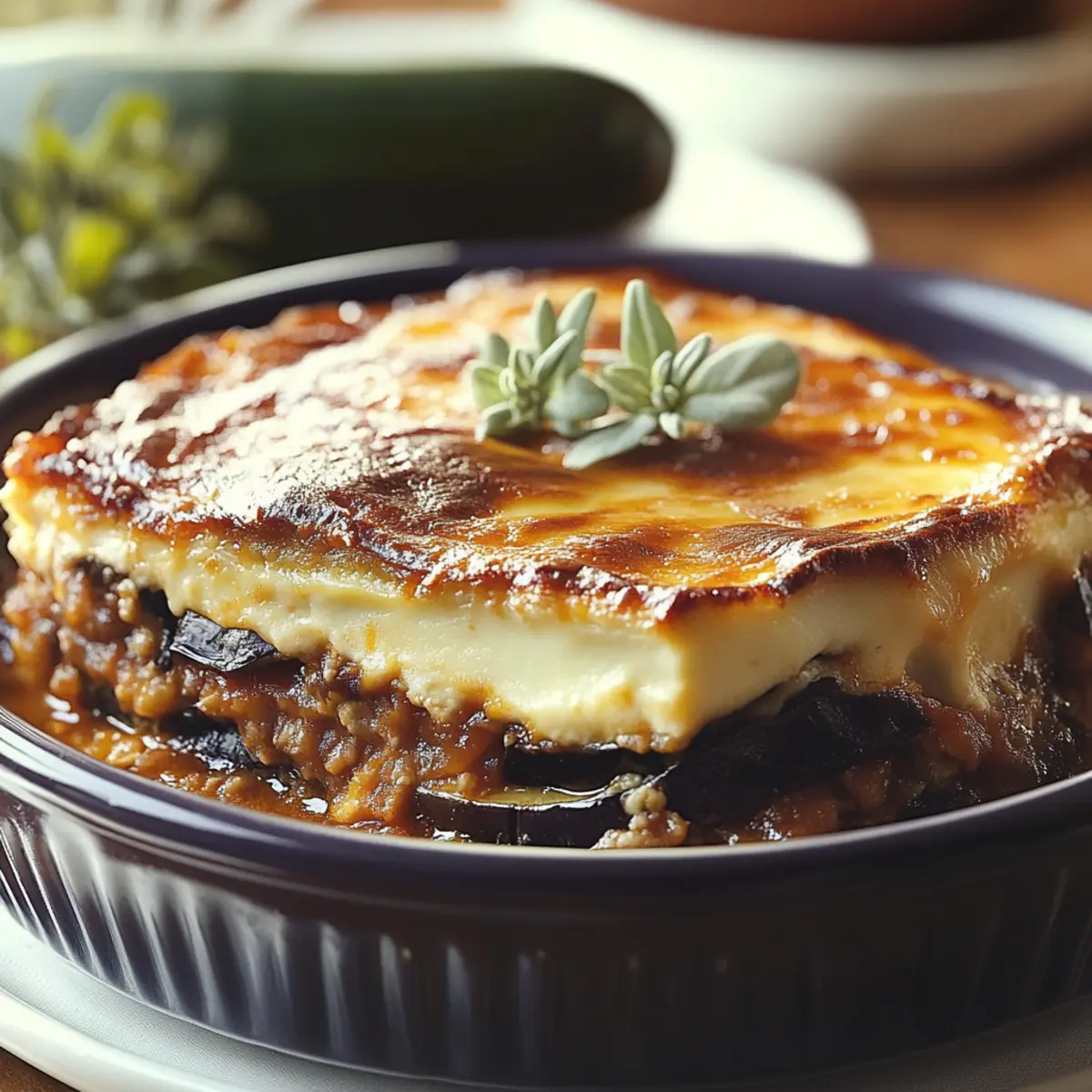
Greek Moussaka Recipe FAQs
What type of eggplants should I use for Greek Moussaka?
Absolutely! When selecting eggplants, look for firm, glossy ones without dark spots or blemishes. Salting them before cooking helps draw out moisture and bitterness, enhancing their flavor and overall dish.
How should I store leftover Greek Moussaka?
You can store leftover Greek Moussaka in an airtight container in the fridge for up to 3 days. For the best texture, I recommend reheating it in the oven. Just pop it in a preheated oven at 165°C (330°F) for about 20-25 minutes until it’s heated through.
Can I freeze Greek Moussaka?
Yes! You can freeze individual portions of Greek Moussaka. To freeze, wrap each portion tightly in plastic wrap and then aluminum foil. This way, they can last up to 3 months! When you’re ready to enjoy, simply thaw in the fridge overnight and reheat in the oven for 20-30 minutes.
What if my béchamel sauce has lumps?
No worries! If your béchamel sauce ends up with lumps, don’t fret! Remove it from heat and strain it through a fine sieve to achieve that smooth texture. This way, you can still enjoy a velvety topping on your moussaka.
Is Greek Moussaka suitable for people with dairy allergies?
While traditional Greek Moussaka contains dairy products in the béchamel and cheese topping, you can certainly modify it! Use dairy-free milk in your béchamel and skip the cheese or substitute it with a plant-based alternative to make it more allergy-friendly.
How long can I keep Greek Moussaka in the refrigerator before it goes bad?
I recommend consuming Greek Moussaka within 3 days when stored in the refrigerator. This ensures you’re enjoying it at its best flavor and quality. Always check for any off smells or changes in texture before consuming!
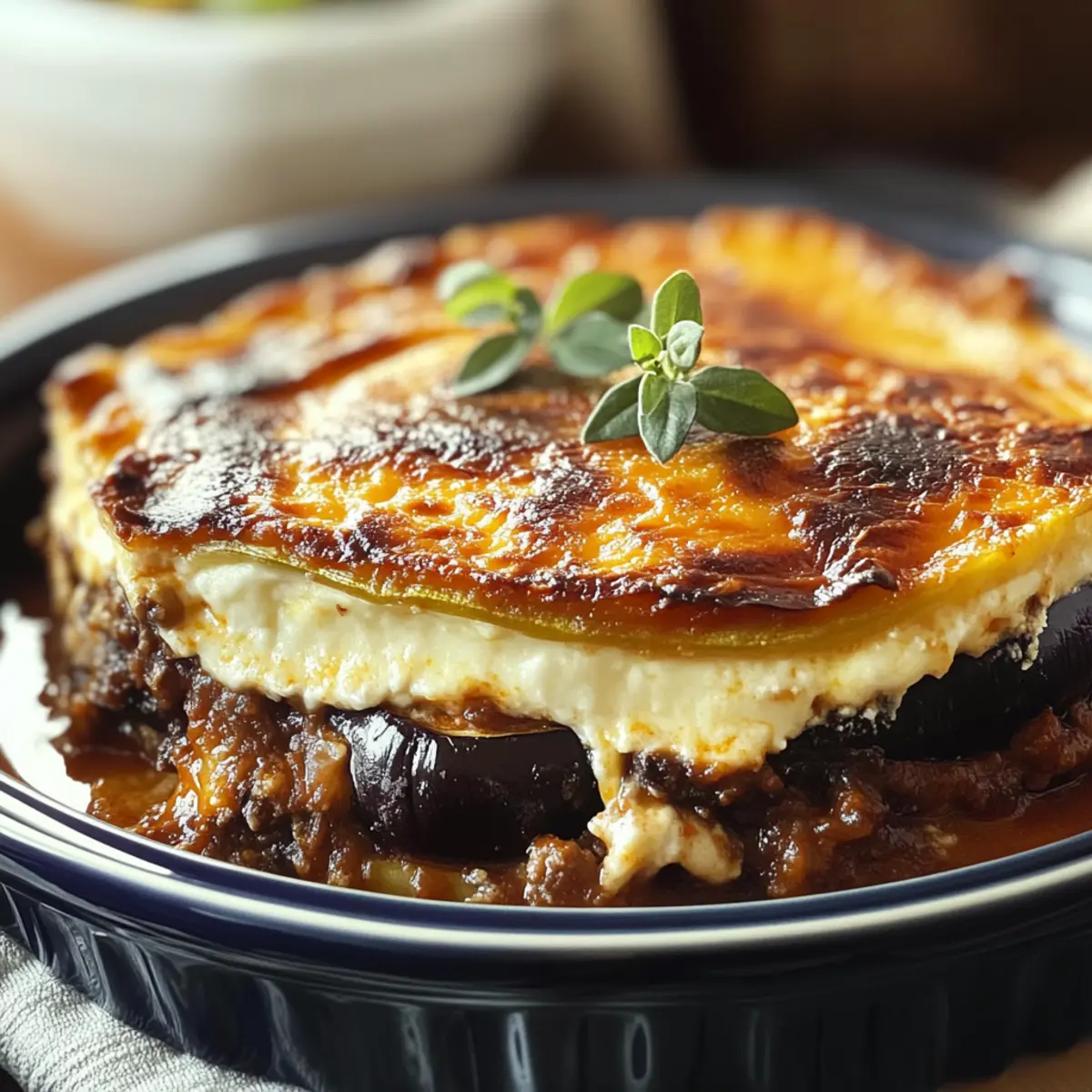
Mouthwatering Greek Moussaka That Comforts Like Home
Ingredients
Equipment
Method
- Slice the eggplants, zucchini, and potatoes into ¼-inch rounds and lay them flat. Sprinkle salt on the eggplant slices and let sit for 30 minutes to draw out moisture.
- Heat olive oil in a large skillet over medium heat until shimmering, fry the sliced vegetables in batches until golden brown, about 3-4 minutes per side.
- In a saucepan, heat olive oil and sauté onions until soft, add garlic, and then ground meat. Brown completely and deglaze with red wine. Add crushed tomatoes and spices, and simmer for 10-15 minutes.
- In another saucepan, melt butter, whisk in flour, then gradually add milk while whisking. Cook until thickened, remove from heat, and stir in egg yolks, cheese, and nutmeg.
- In a greased baking dish, layer the potatoes, eggplant, zucchini, and meat sauce until all ingredients are used, finishing with béchamel on top.
- Preheat the oven to 165°C (330°F) and bake the moussaka for 40-45 minutes until golden and bubbling.
- Let the baked moussaka rest for 30 minutes before slicing to allow layers to set.
Leave a Reply