
A delicious aroma wafted through my kitchen, instantly whisking me away to the bustling streets of Seoul. That’s the magic of Korean Beef Noodles. This comfort food is not just a meal; it’s a warm embrace after a long day—savory broth bubbling with tender beef and hearty noodles, all crafted effortlessly in your slow cooker. Perfect for those busy weeknights, this recipe allows you to set it and forget it, giving you a satisfying dinner with minimal effort. Plus, it’s made with simple ingredients that are likely already in your pantry! Curious about how to recreate this culinary hug in a bowl? Let’s dive into the recipe and transform your dinner into a comforting delight!
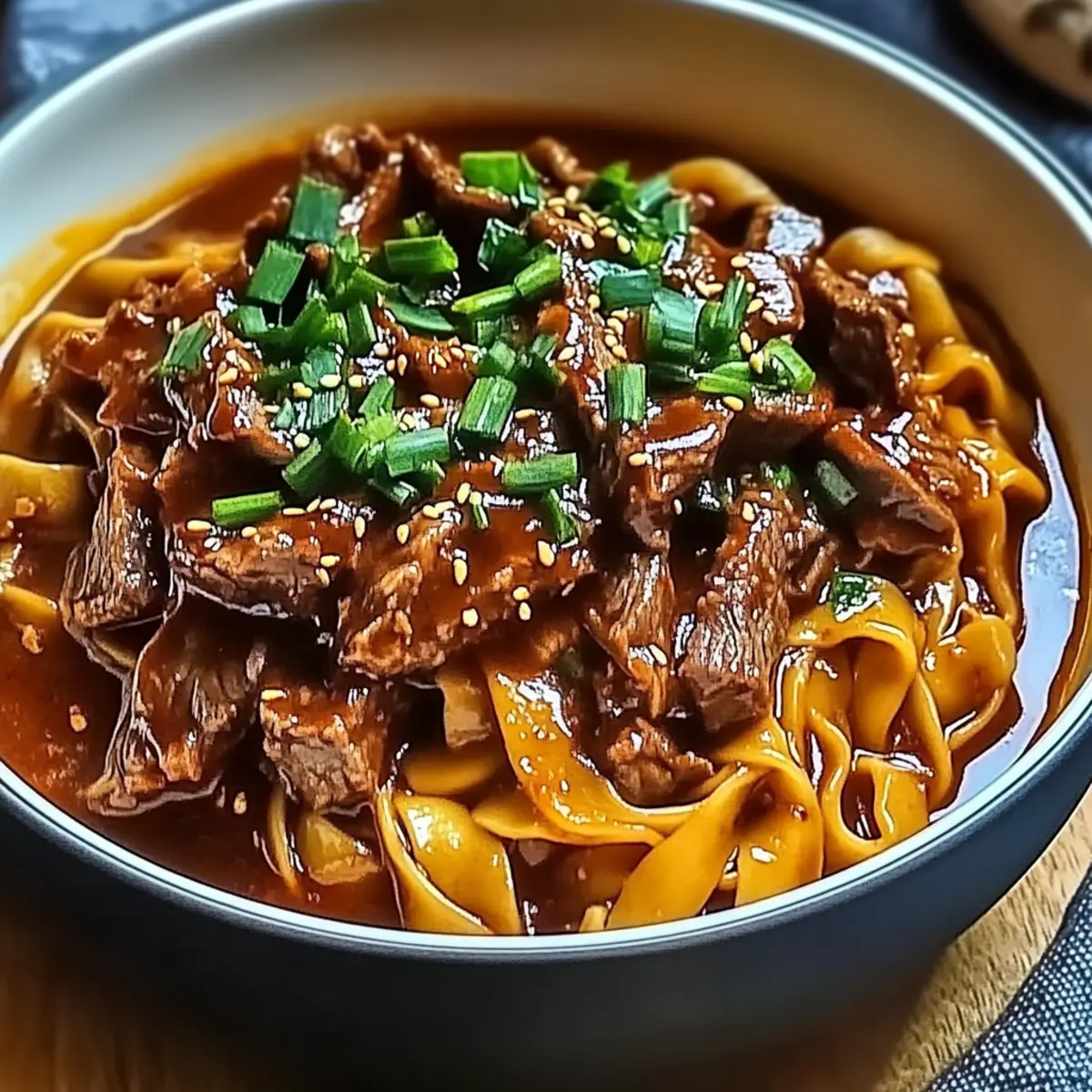
Why are Korean Beef Noodles so beloved?
Savoriness in every bite: The combination of tender beef and rich broth immerses you in flavors that will satisfy your cravings.
Time-saving delight: With a slow cooker, prep is minimal—just set it and enjoy fully cooked comfort later!
Versatility: Feel free to swap out ingredients, like using chicken thighs for a lighter dish or even tofu for a vegetarian twist.
Texture play: Each mouthful showcases melt-in-your-mouth beef paired with chewy noodles, making it a wonderfully layered dish.
Looking for more delicious options? You might also enjoy our Beef Pasta Comforting or the flavorful Chinese Beef Broccoli for a satisfying dinner lineup!
Korean Beef Noodles Ingredients
• Here’s what you’ll need to create this comforting dish!
For the Beef
- Beef Chuck – Provides protein and rich flavor. Use brisket as a substitution for a different texture.
- Black Pepper – For seasoning and depth. Adjust the quantity based on your spice tolerance.
For the Broth
- Beef Broth – Acts as the base for the sauce, adding depth. Low-sodium broth can be used for a healthier option.
- Soy Sauce – Adds saltiness and umami. For gluten-free, substitute with tamari.
- Brown Sugar – Contributes sweetness to balance the savory flavors. Can replace it with coconut sugar.
- Ginger (minced) – Adds warmth and spice. Fresh is preferred over powdered.
- Garlic (minced) – Provides aromatic flavor and richness.
- Sesame Oil – Enhances the dish with a nutty flavor. Use olive oil as a mild alternative, but the taste will slightly differ.
- Gochujang – Introduces heat and complexity; Sriracha can act as a substitute for less heat.
For the Noodles
- Fresh/Dried Noodles – Acts as the main carbohydrate component; udon or ramen are ideal. Substitute with rice noodles for gluten-free options.
For Garnishing
- Green Onions (for garnish) – Adds freshness and color.
- Sesame Seeds (optional) – For sprinkling and added crunch.
- Fresh Cilantro (optional) – For a fresh herbaceous note.
With the key ingredients ready, you’re set to embark on a flavorful journey with these delicious Korean Beef Noodles!
Step‑by‑Step Instructions for Korean Beef Noodles
Step 1: Prepare the Beef
Start by cutting the beef chuck into uniform chunks, about 1 to 1.5 inches each. Season the beef pieces generously with black pepper, ensuring they are evenly coated. This step enhances the flavor, giving the Korean Beef Noodles a savory depth right from the start.
Step 2: Mix the Sauce
In a medium bowl, combine the beef broth, soy sauce, brown sugar, minced ginger, minced garlic, sesame oil, and gochujang. Whisk the mixture thoroughly until the brown sugar dissolves completely, creating a flavorful sauce. The colors should blend beautifully, hinting at the savory richness awaiting your Korean Beef Noodles.
Step 3: Place in Slow Cooker
Transfer the seasoned beef chunks into your slow cooker, spreading them out evenly. Pour the prepared sauce mixture over the beef, ensuring every piece is submerged and coated. This crucial step allows the flavors to infuse deeply into the meat as it cooks.
Step 4: Cook
Cover the slow cooker with its lid and set it to cook on low for about 6 to 8 hours, or high for 3 to 4 hours. You’ll know it’s ready when the beef becomes fork-tender and the aroma fills your kitchen with mouthwatering excitement. Resist the urge to lift the lid too often, as this could extend cooking time.
Step 5: Prepare Noodles
About 15 to 20 minutes before serving, cook the fresh or dried noodles according to the package instructions. Usually, this takes around 8-10 minutes in a pot of boiling water. Once cooked, drain the noodles and set them aside, keeping them warm while the beef finishes cooking.
Step 6: Combine
Once the beef is tender, carefully add the cooked noodles to the slow cooker. Gently stir the mixture to incorporate the noodles with the beef and sauce. Let it sit for an additional 5-10 minutes, allowing the noodles to soak up the rich flavors of the broth.
Step 7: Serve
Dish the Korean Beef Noodles into serving bowls. For a finishing touch, garnish each bowl with sliced green onions, a sprinkle of sesame seeds, and fresh cilantro if desired. The vibrant colors and delightful aromas will have everyone ready to dig in!
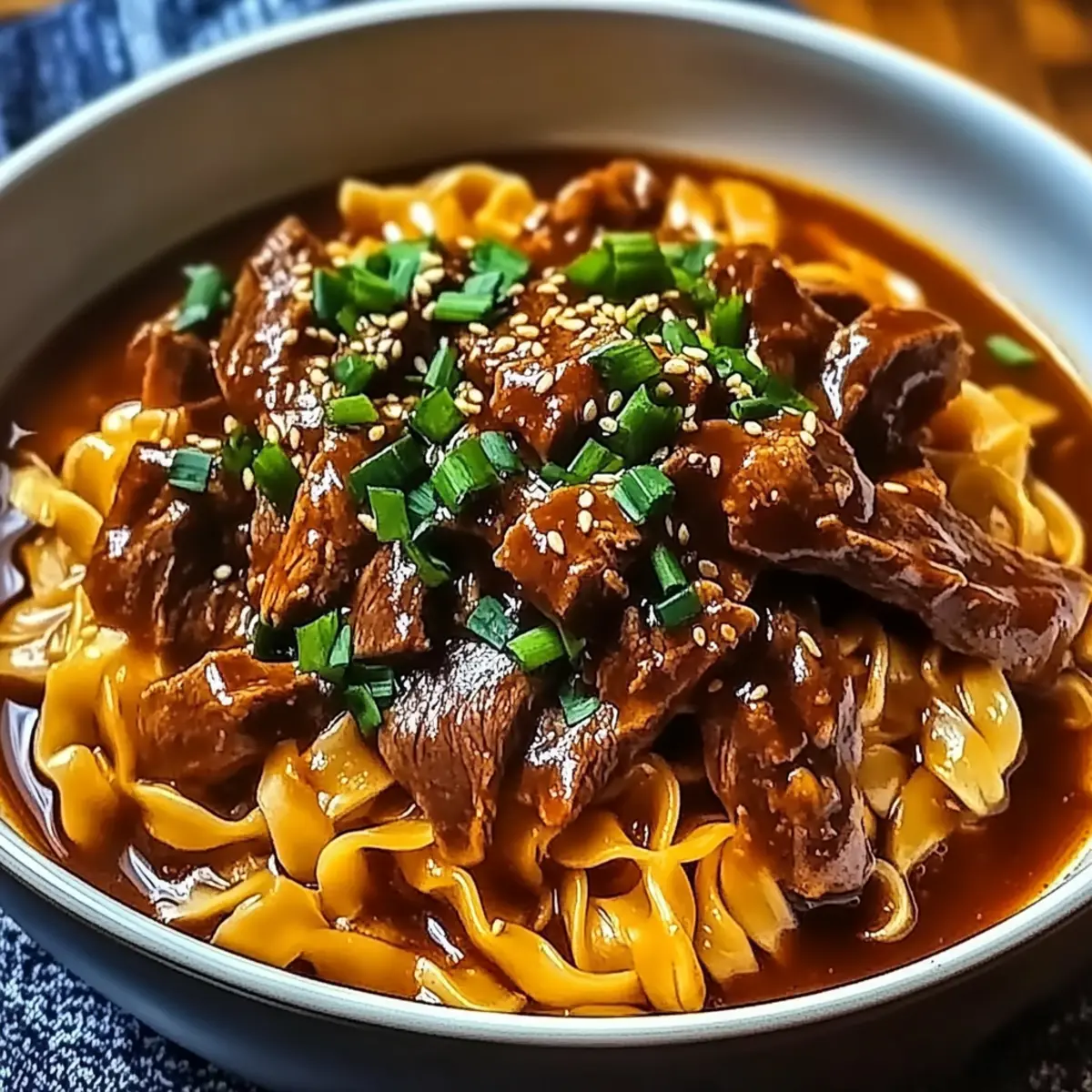
What to Serve with Korean Beef Noodles
Elevate your dinner table with delightful sides that complement the rich flavors and textures of this comforting dish.
-
Steamed Bok Choy: This vegetable adds a fresh crunch and mild bitterness, balancing the savory broth beautifully.
-
Spicy Kimchi: For a zesty contrast, pickled kimchi provides heat and tang, enhancing the overall dining experience.
-
Garlic Breadsticks: Their buttery texture and garlic aroma create a satisfying pairing, perfect for soaking up the delicious broth.
-
Cucumber Salad: A light and refreshing salad with a tangy dressing acts as a palate cleanser, making each bite of noodles even more enjoyable.
-
Miso Soup: This savory soup adds a comforting Japanese twist, enriching your meal with umami flavors that play harmoniously with the beef noodles.
-
Sake or Soju: Cheers to a traditional beverage! These drinks enhance the meal’s authenticity, offering a smooth, rich complement to the dish.
-
Sesame Green Beans: Sautéed green beans with sesame seeds give a nutty flavor and delightful crunch, rounding out a wholesome meal.
-
Lemon Sorbet: For a sparkling contrast, a light sorbet can cleanse the palate, refreshing your senses after the hearty noodles.
Korean Beef Noodles: Customization Ideas
Feel free to play with this recipe and create flavors that are uniquely yours!
-
Chicken Thighs: Substitute beef with chicken thighs for a lighter, still-satisfying option that retains the comforting essence.
-
Vegetarian Tofu: Use cubed tofu and vegetable broth for a plant-based version. Just remember to marinate it for maximum flavor!
-
Added Veggies: Toss in veggies like bok choy or mushrooms in the final hour for a nutritious boost. They’ll add texture and a pop of color!
-
Gluten-Free Noodles: Swap regular noodles for rice noodles to keep it gluten-free. They soak up the broth beautifully!
-
Creamy Twist: Stir in some coconut milk for a creamy version. This twist will lend a delightful richness to your already savory soup.
-
Mini Meatballs: Make little meatballs from ground meat instead and let them cook in the sauce for an extra special touch.
-
Heat Level: Adjust the spice by adding more or less gochujang. For a milder twist, try Sriracha or omit the heat entirely.
-
Broth Boost: Infuse in extra flavor by tossing in a few star anise or a cinnamon stick while cooking. It’ll make your dish memorable!
Consider pairing your Korean Beef Noodles with a side of our delightful Ground Beef Dumplings or the hearty Chinese Beef Broccoli for a flavor-packed dinner!
Expert Tips for Korean Beef Noodles
-
Uniform Cuts: Ensure the beef is cut into uniform pieces for even cooking; uneven sizes can lead to some pieces being tough while others are tender.
-
Marinate Overnight: For maximum flavor, allow the sauce to cool and marinate the beef overnight in the fridge before slow cooking. This enhances the savory profile of your Korean Beef Noodles.
-
Slow Cooker Capacity: Don’t overcrowd the slow cooker; too much meat can affect cooking times and tenderness. Aim for a snug fit without cramming.
-
Adjusting Spice: If you prefer mild, use less gochujang or substitute with Sriracha for a milder heat. Remember, the balance of flavors is key!
-
Noodle Prep: Cook noodles al dente, as they will continue to absorb the broth in the slow cooker. Avoid overcooking to maintain their perfect texture.
-
Garnish for Flavor: Never skip the garnishing! Fresh green onions and sesame seeds add not just crunch but also elevate the flavor profile of your Korean Beef Noodles.
Make Ahead Options
These Korean Beef Noodles are ideal for meal prep, allowing you to enjoy delicious, homemade comfort even on your busiest days! You can season the beef and marinate it in the sauce for up to 24 hours in advance, enhancing the flavor. Additionally, you can cook the beef in the slow cooker a day ahead and store it in the refrigerator for up to 3 days. When ready to serve, simply reheat the beef and broth mixture gently on the stovetop or in the microwave while you prepare the noodles according to the package instructions. This way, you’ll have a satisfying, flavor-packed meal with minimal effort!
How to Store and Freeze Korean Beef Noodles
Fridge: Store leftovers in an airtight container for up to 3 days. Make sure the noodles are well-coated with broth to keep them moist.
Freezer: For longer storage, freeze Korean Beef Noodles in freezer-safe containers for up to 2 months. Freeze the noodles and beef separately if possible to maintain texture.
Reheating: To reheat, thaw overnight in the fridge, then warm in a pot over medium heat. Add a splash of water or broth to loosen up the mixture for the perfect consistency.
Room Temperature: Avoid leaving out for more than 2 hours to ensure food safety; refrigerate promptly after cooling.
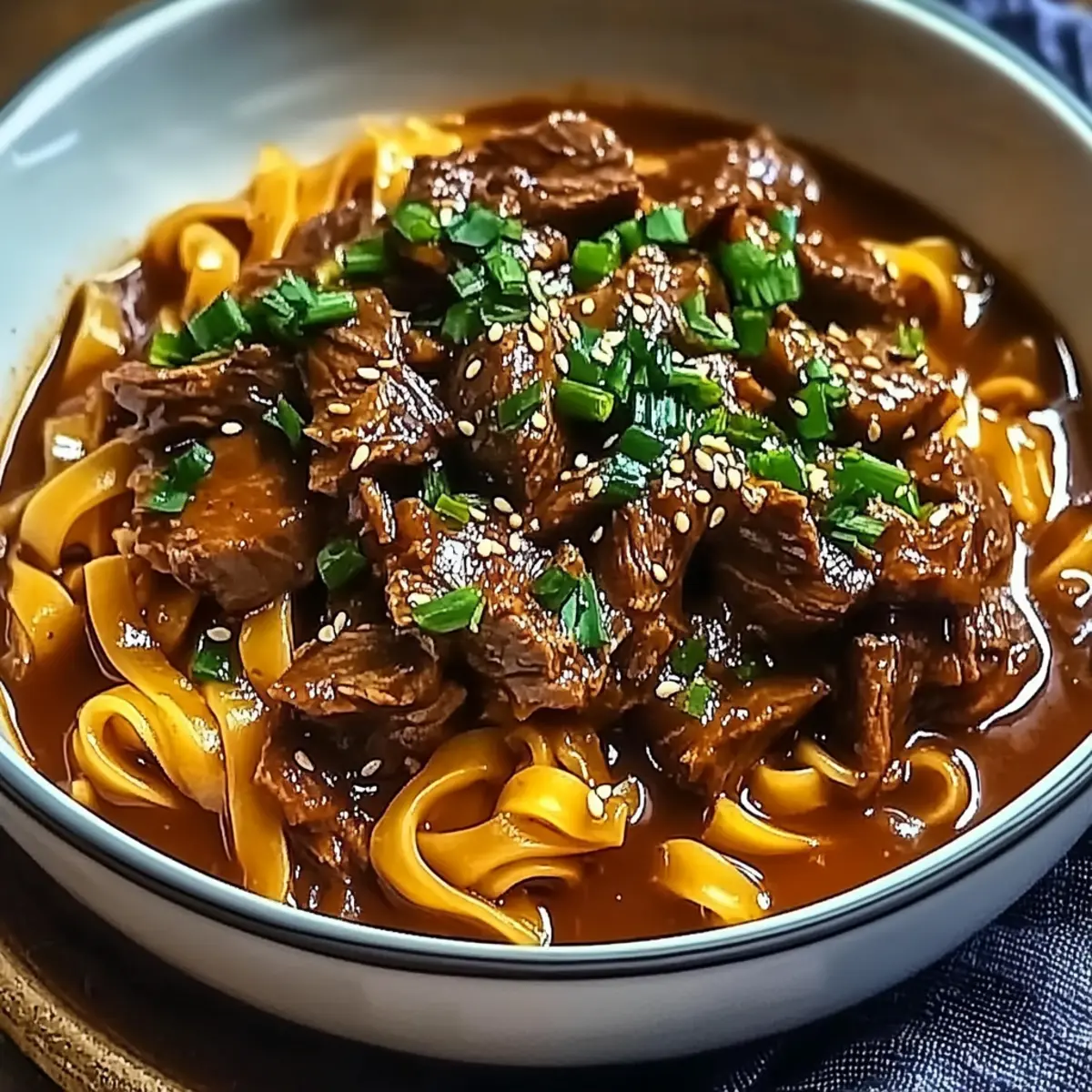
Korean Beef Noodles Recipe FAQs
What type of beef is best for Korean Beef Noodles?
Absolutely! Beef chuck is ideal due to its rich flavor and tenderness when cooked slowly. If you’re looking for a different texture, brisket makes a lovely substitution. Just ensure whatever meat you choose is well-seasoned to enhance the overall taste.
How should I store leftovers of Korean Beef Noodles?
I often store leftovers in an airtight container in the refrigerator for up to 3 days. To maintain moisture, it’s best to keep the noodles coated with broth. Simply reheat on the stove, adding a splash of water to loosen it up if needed.
Can I freeze Korean Beef Noodles?
Yes, you can! For optimal results, freeze the Korean Beef Noodles in freezer-safe containers for up to 2 months. If you can, separate the noodles and beef to preserve the texture—this way, the noodles won’t become mushy when thawed.
What should I do if my beef isn’t tender after cooking?
Very good question! If your beef isn’t fork-tender after the suggested cooking time, it might just need a bit more time in the slow cooker. Try to cook it on low for an additional 30 minutes to 1 hour. It’s essential to allow the tough cuts of meat to break down, which enhances the flavor and tenderness.
Can I make Korean Beef Noodles gluten-free?
Absolutely! To make this dish gluten-free, substitute soy sauce with tamari. Additionally, opt for rice noodles instead of regular noodles to keep it gluten-free while still enjoying the delicious, savory experience of Korean Beef Noodles.
How do I know when my noodles are cooked perfectly for this dish?
For optimal texture, cook the noodles al dente according to the package instructions. Usually, this takes about 8-10 minutes. Since they will absorb some broth in the slow cooker, make sure not to overcook them. A perfect noodle should have a slight chew to it—delightfully satisfying!
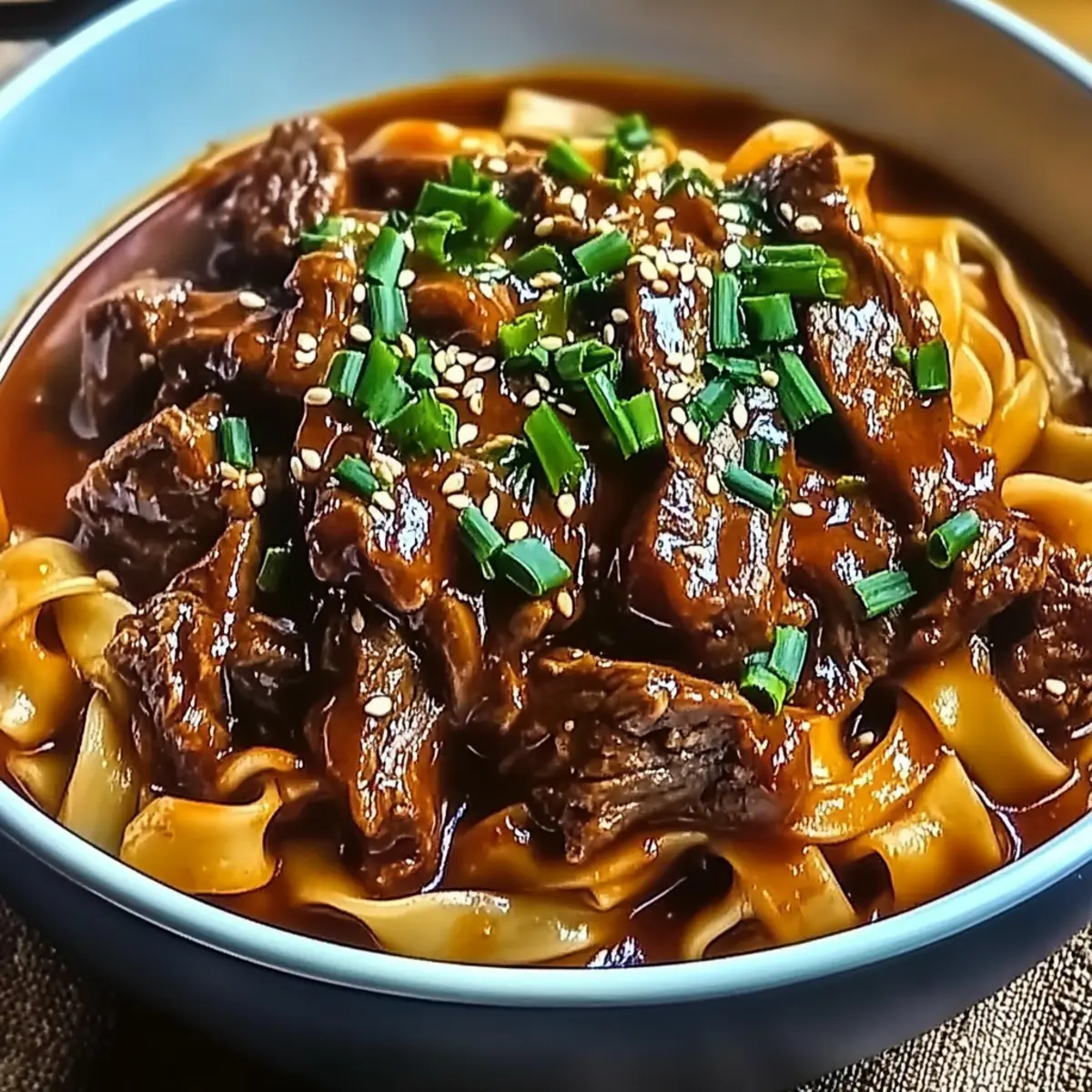
Korean Beef Noodles: Savory Comfort You’ll Crave
Ingredients
Equipment
Method
- Cut the beef chuck into 1 to 1.5-inch chunks and season with black pepper.
- In a bowl, mix beef broth, soy sauce, brown sugar, minced ginger, minced garlic, sesame oil, and gochujang.
- Transfer the seasoned beef to the slow cooker and pour the sauce over it.
- Cook on low for 6-8 hours or high for 3-4 hours until beef is fork-tender.
- Cook noodles according to package instructions about 15-20 minutes before serving.
- Once beef is tender, gently stir in cooked noodles and allow to sit for 5-10 minutes.
- Serve in bowls garnished with green onions, sesame seeds, and cilantro.
Leave a Reply