
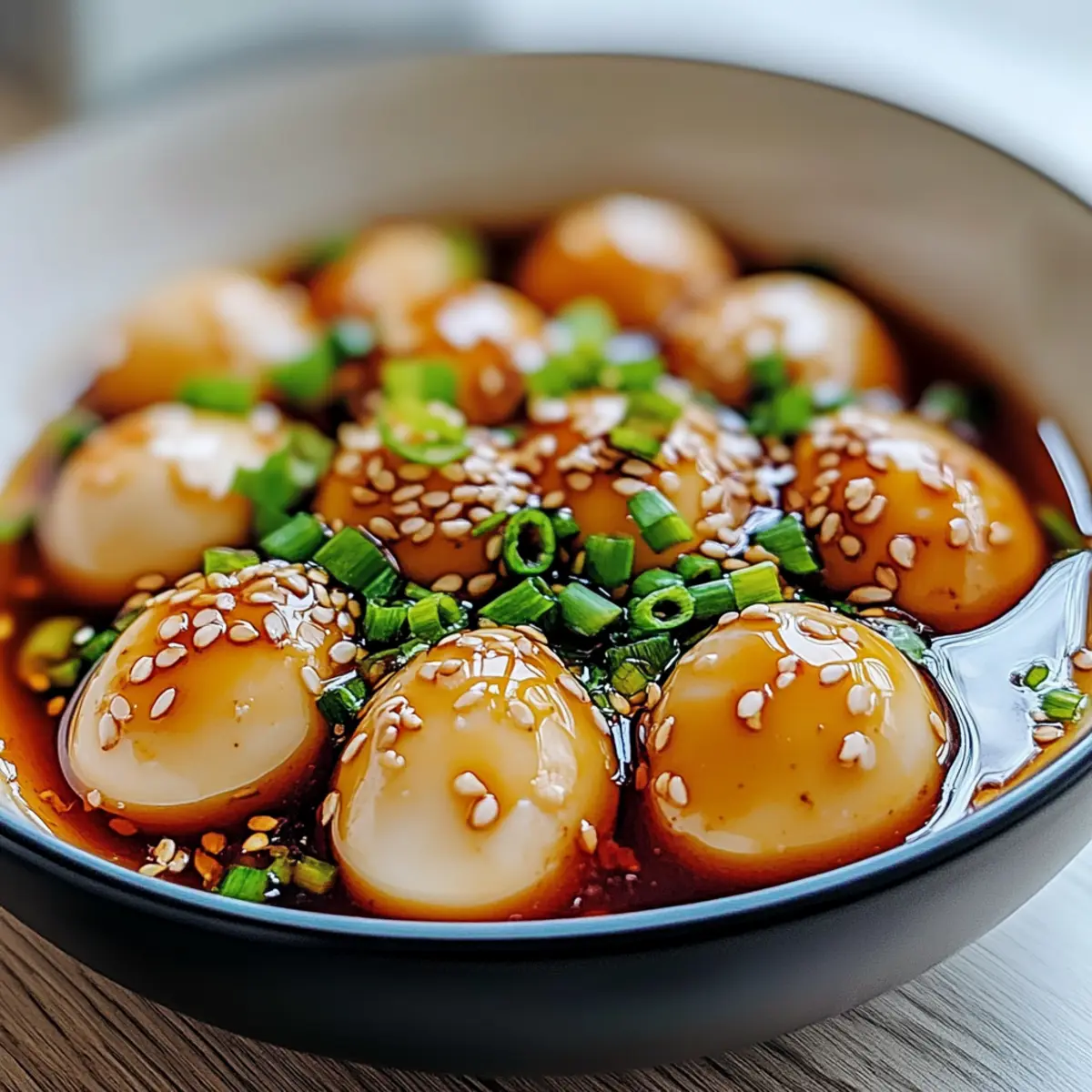
As I cracked open that first egg, the rich, savory aroma enveloped me, teasing my senses with promises of flavor. Korean Marinated Eggs, or Mayak Gyeran, offer a delightful twist on a classic snack, transforming ordinary soft-boiled eggs into mouthwatering bites through a simple yet irresistible soy sauce marinade. Not only is this dish quick to prepare—taking just 30 minutes for an impressive outcome—but it’s also perfect for elevating any meal, whether you’re adding it to a rice bowl or enjoying it as a stand-alone treat. Trust me, once you try these addictive marinated eggs, they’ll become a favorite in your kitchen. Curious about how to whip them up? Let’s dive in!
Why are Marinated Eggs so Addictive?
Simplicity at Its Best: With just a handful of ingredients, you can master this quick recipe in no time.
Savory Umami Punch: The rich soy sauce marinade takes these soft-boiled eggs to a whole new level, creating mouthwatering bites.
Versatile Treat: Perfect for snacking, rice bowls, or as a banchan spread, these eggs can adapt to any meal.
Meal Prep Friendly: Make a batch ahead, and enjoy them for days—just keep them submerged in the marinade to retain that flavor.
Nutritional Value: Each egg packs 6g of protein, making them a tasty and healthy addition to your diet. Dive into your new favorite snack sensation with these Korean Marinated Eggs—your taste buds will thank you!
Marinated Eggs Ingredients
For the Eggs
• Large Eggs – Use fresh eggs for optimal flavor and easy peeling.
For the Marinade
• Low-sodium Soy Sauce – Adds umami flavor and saltiness; substitute with tamari for gluten-free marinated eggs.
• Mirin – Provides a hint of sweetness; can be replaced with a mix of white wine and sugar if needed.
• Sesame Oil – Imparts nuttiness; opt for toasted sesame oil for a more intense flavor.
• Minced Garlic (optional) – Enhances the marinade’s complexity; feel free to leave it out for a milder taste.
For Garnish
• Sliced Green Onions – Adds freshness and visual flair; consider using sesame seeds or chili flakes for an extra kick.
Step‑by‑Step Instructions for Korean Marinated Eggs
Step 1: Boil the Eggs
Start by placing large eggs in a single layer in a pot and cover them with cold water, ensuring they’re submerged. Bring the water to a gentle boil over medium heat, then cover the pot and remove it from the heat. Let the eggs sit in the hot water for 10 to 12 minutes, which will yield perfectly cooked yolks ready for marination.
Step 2: Prepare Ice Bath
While the eggs are cooking, fill a large bowl with ice water. This ice bath will shock the eggs once removed from the pot, halting the cooking process and ensuring they remain tender and creamy inside. Keep the ice water ready as a vital step in maintaining their ideal texture for your Korean Marinated Eggs.
Step 3: Cool Eggs
Once the eggs have completed the sitting time, gently transfer them from the hot water into the ice bath using a slotted spoon. Allow the eggs to cool in the ice water for about 5 minutes. This step not only stops further cooking but also makes peeling significantly easier, enhancing your experience when preparing delicious marinated eggs.
Step 4: Peel the Eggs
Once cooled, carefully tap each egg on a hard surface to crack the shell. Gently peel the eggs under cool running water to remove the shells effortlessly. This method helps to loosen the shell, allowing for a smooth transition to the next step as you prepare for the flavorful marinade.
Step 5: Make the Marinade
In a medium bowl, combine low-sodium soy sauce, a splash of mirin, and a drizzle of toasted sesame oil. If you’re adding minced garlic for extra depth, stir it in at this stage. Mix everything together until well blended, creating a rich, savory marinade perfect for your marinated eggs, ready to soak up all that flavor.
Step 6: Marinate the Eggs
Place the peeled eggs into the marinade, ensuring they’re completely submerged. Cover the bowl with plastic wrap or transfer the eggs to an airtight container. Refrigerate them for at least 2 hours, or overnight if time allows, to allow the soy sauce mixture to penetrate the eggs thoroughly, enhancing the taste of your Korean Marinated Eggs.
Make Ahead Options
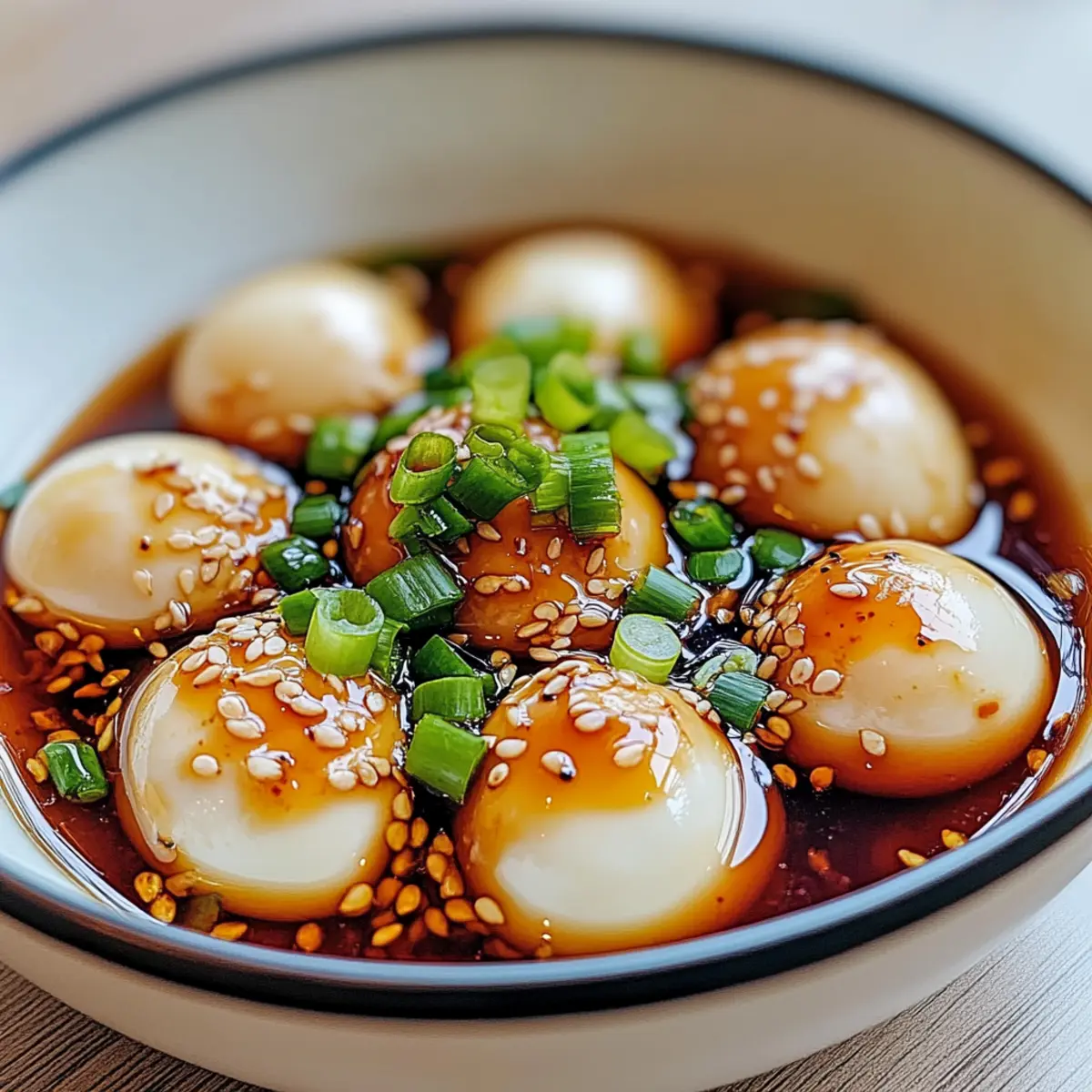
These Korean Marinated Eggs are perfect for meal prep enthusiasts! You can boil and peel the eggs up to 3 days in advance, ensuring they are kept in the refrigerator to maintain freshness. To prepare ahead, simply follow the boiling process, cool them in an ice bath, and peel when ready. Then, make the marinade and soak the eggs in it, refrigerating for at least 2 hours or even overnight for deeper flavor. To serve, just remove the eggs from the marinade and garnish them with sliced green onions or sesame seeds. This approach not only saves you time during busy weeknights but also ensures the marinated eggs stay just as delicious and flavorful!
Marinated Eggs Variations and Substitutions
Feel free to get creative with these marinated eggs; there’s so much room for delicious customization!
- Dairy-Free: Substitute soy sauce with coconut aminos for a slightly sweeter, soy-free option.
- Spicy Kick: Add a teaspoon of gochugaru (Korean red pepper flakes) to the marinade for a delightful heat.
- Herbal Twist: Incorporate fresh herbs like dill or cilantro into the marinade for a fresh flavor boost. It adds a wonderful aromatic element!
- Shorter Marinade: If pressed for time, marinate for just 30 minutes. While the flavor won’t be as deep, it’s still tasty!
- Vegan Option: For a plant-based alternative, use silken tofu instead of eggs, marinating the cubes just as you would the eggs.
- Sweet & Savory: Increase the mirin or add a splash of honey to the marinade for a touch of sweetness that complements the savory notes well.
- Smoky Flavor: Use smoked soy sauce instead of regular soy sauce for an irresistible smoky taste that elevates the dish.
- Citrus Zest: Add a teaspoon of orange or lemon zest to the marinade for a refreshing twist that brightens the flavors beautifully.
These variations can easily transform your Korean Marinated Eggs into exciting new taste experiences! If you’re interested in diving deeper into flavor pairings, consider adding a twist with my spicy kimchi or serve them alongside a comforting bowl of steamed rice. Enjoy the culinary adventure!
Tips for the Best Marinated Eggs
• Use Fresh Eggs: Fresh eggs result in better flavor and easier peeling, giving you the perfect base for mouthwatering marinated eggs.
• Optimize Marinade Time: For the best flavor balance, marinate your eggs for 6 to 12 hours only; over-marinating may lead to excessive saltiness.
• Customize Your Flavors: Feel free to add additional garnishes like sesame seeds or a sprinkle of chili flakes for a delightful kick that complements the savory marinade.
• Cool Properly: Don’t skip the ice bath; it halts the cooking process and ensures creamy yolks for your delicious marinated eggs.
• Store Correctly: Keep your marinated eggs submerged in the marinade within an airtight container to maximize freshness and prevent any fridge odors from seeping in.
How to Store and Freeze Marinated Eggs
Fridge: Store marinated eggs in an airtight container in the refrigerator for up to one week. Ensure they remain submerged in the marinade to retain maximum flavor.
Freezer: While it’s not recommended to freeze marinated eggs due to texture changes, if necessary, you can freeze them for up to 3 months. Just be aware that their creaminess may be affected.
Reheating: If serving marinated eggs cold, simply remove them from the fridge and enjoy. For a warm option, gently warm them in a microwave for about 30 seconds.
Room Temperature: Avoid leaving marinated eggs out at room temperature for more than 2 hours to prevent bacterial growth and ensure their quality stays safe.
What to Serve with Korean Marinated Eggs?
As you indulge in the irresistible richness of these marinated delights, let’s explore the perfect accompaniments to elevate your meal experience even further.
-
Steamed Rice: A classic choice, fluffy white rice beautifully absorbs the marinade, adding a comforting base to enjoy the eggs with every bite.
-
Fresh Vegetable Salad: Crisp greens tossed with a light vinaigrette offer a refreshing contrast, balancing the savory richness of the marinated eggs.
-
Kimchi: A staple in Korean cuisine, the spicy and tangy notes of kimchi perfectly complement the savory eggs, providing a zesty kick that’s hard to resist.
-
Dipping Sauce: A mix of soy sauce, sesame oil, and a hint of chili pairs beautifully, allowing you to soak the eggs in even more flavor for a delicious burst.
-
Cucumber Slices: Crunchy, cool cucumber slices can act as a refreshing bite alongside the savory eggs, keeping your palate refreshed and engaged.
-
Soba Noodles: Serve your marinated eggs on a bed of chilled soba noodles, drizzled with soy sauce, for a delightful dish that combines texture and flavor.
-
Pickled Vegetables: The acidity of pickled radishes or other vegetables can cut through the richness of the eggs, providing a delightful contrast with each mouthful.
-
Green Tea: For a warm beverage option, satisfy your senses with a cup of earthy green tea, enhancing the meal’s overall taste and creating a comforting experience.
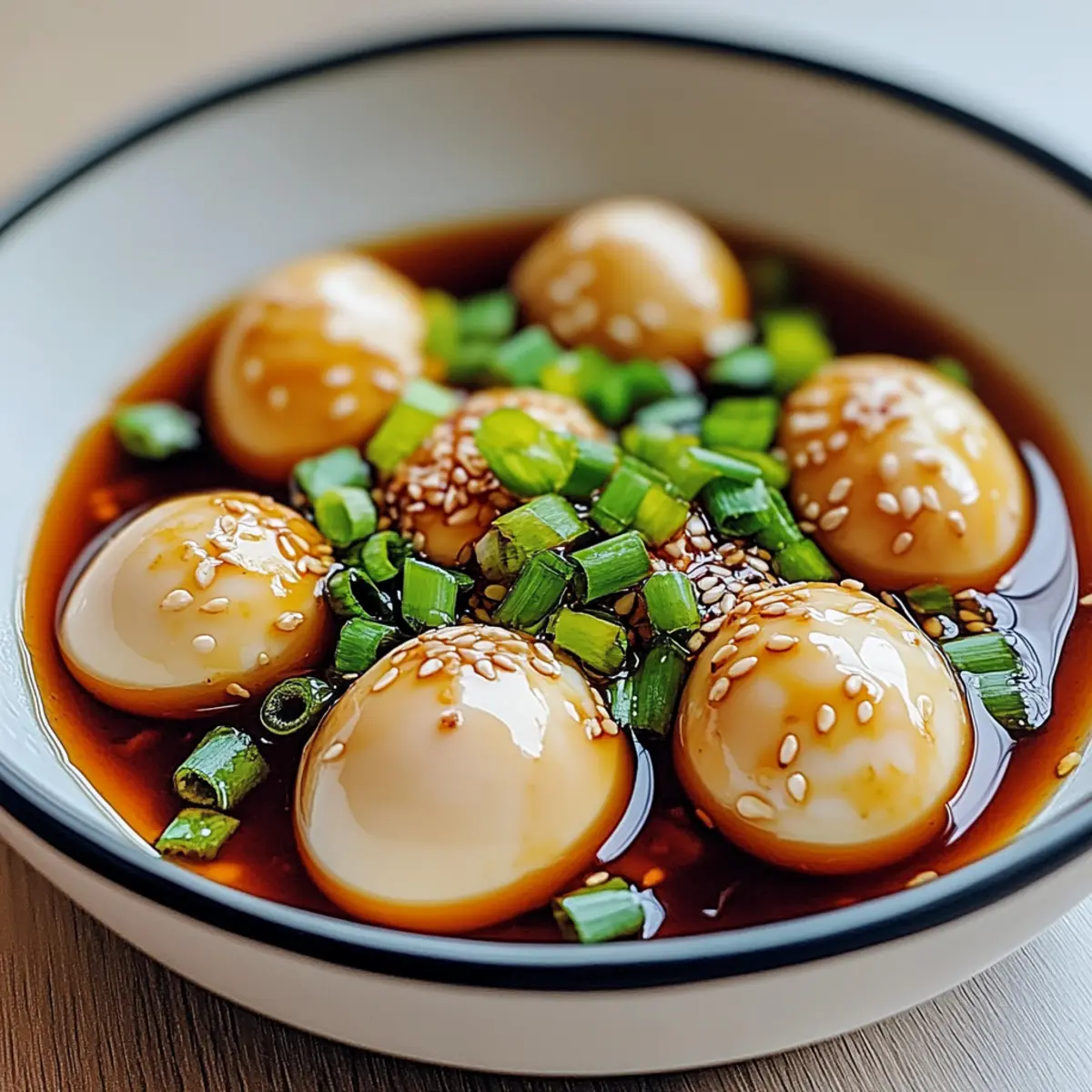
Korean Marinated Eggs Recipe FAQs
How do I choose the best eggs for marinated eggs?
Absolutely! When selecting eggs for your Korean Marinated Eggs, opt for large, fresh eggs. Fresh eggs yield a better flavor and smoother peeling experience. You’ll know they’re fresh if the shells are clean and free of cracks, and they should feel heavy in your hand.
How should I store my marinated eggs?
To keep your marinated eggs fresh, store them in an airtight container in the refrigerator for up to one week. It’s essential to ensure the eggs remain submerged in the marinade to maintain their flavor and prevent them from drying out.
Can I freeze marinated eggs?
While it’s best not to freeze marinated eggs due to potential changes in texture, you can freeze them for up to 3 months if necessary. When doing so, first ensure they’re well-submerged in the marinade, then transfer them to a freezer-safe container. Just keep in mind that the creamy consistency may be altered upon thawing.
What if my eggs are too salty after marinating?
Very good question! If you find your marinated eggs are too salty, consider reducing the marination time next time and sticking to a range of 6 to 12 hours for balanced flavor. If this batch is over-marinated, you can soak them in water for about 30 minutes to help draw out some saltiness. This simple trick can salvage your eggs while still keeping the core flavors intact.
Are marinated eggs safe for those with allergies?
Check your soy sauce and mirin for allergens, as they may contain gluten or other ingredients. Opt for tamari as a gluten-free substitute for soy sauce. Always read labels carefully, and if you’re introducing them to kids or anyone with specific allergies, consider consulting with a doctor before serving.
What should I do if my eggs are difficult to peel?
If you find it challenging to peel your eggs, try peeling them under running water after cracking the shells gently. The water helps to separate the shell from the egg, making the peeling process smoother. Additionally, using slightly older eggs (about a week old) can lead to easier peeling than super fresh eggs.
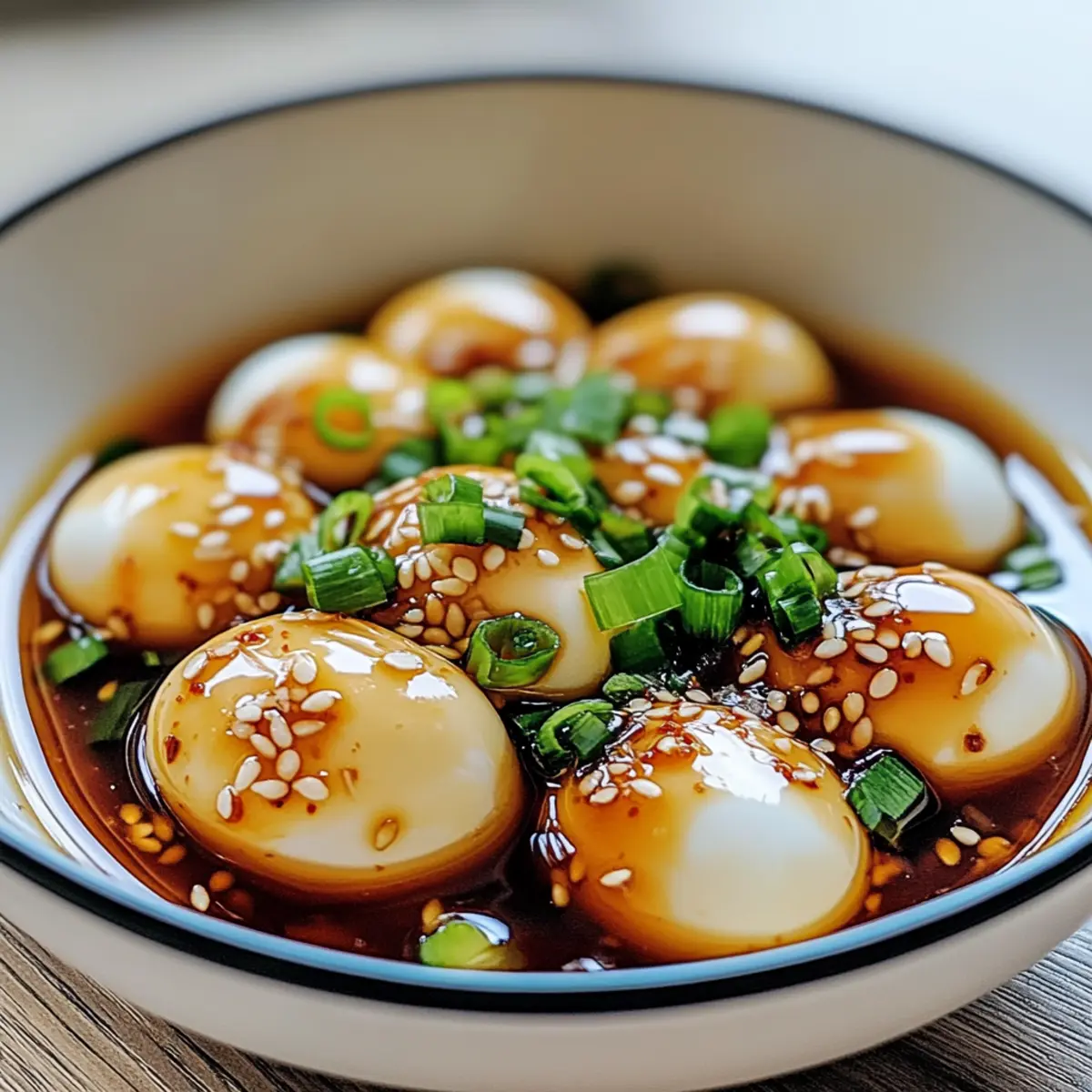
Delicious Marinated Eggs: Your New Favorite Snack Sensation
Ingredients
Equipment
Method
- Start by placing large eggs in a single layer in a pot and cover them with cold water, ensuring they're submerged. Bring to a gentle boil over medium heat, cover, and remove from heat. Let eggs sit for 10 to 12 minutes.

- While the eggs are cooking, fill a large bowl with ice water. This ice bath will shock the eggs once removed from the pot.
- Once the eggs have completed the sitting time, transfer them from the hot water into the ice bath. Allow the eggs to cool in the ice water for about 5 minutes.
- Once cooled, carefully tap each egg on a hard surface to crack the shell. Peel under cool running water.
- In a medium bowl, combine low-sodium soy sauce, mirin, and sesame oil. If using, stir in minced garlic. Mix until blended.
- Place peeled eggs into the marinade, ensuring they’re submerged. Cover with plastic wrap or transfer to an airtight container. Refrigerate for at least 2 hours, or overnight for best results.
Leave a Reply