
As I stood in the kitchen, the vivid aroma of tamarind and garlic wafted through the air, instantly transporting me to a bustling market in Thailand. My heart raced with excitement as I prepared to dive into the world of homemade Chicken Pad Thai. This quick weeknight dinner is not just about satisfying cravings; it’s a canvas for creativity, allowing you to customize it with chicken, shrimp, or tofu! Plus, it’s gluten-free with a simple tamari swap, making it accessible for everyone. Each bite of this dish reveals a delightful medley of textures and flavors, from the chewy rice noodles to the crunchy peanuts. Are you ready to embark on this flavorful journey right in your own kitchen?
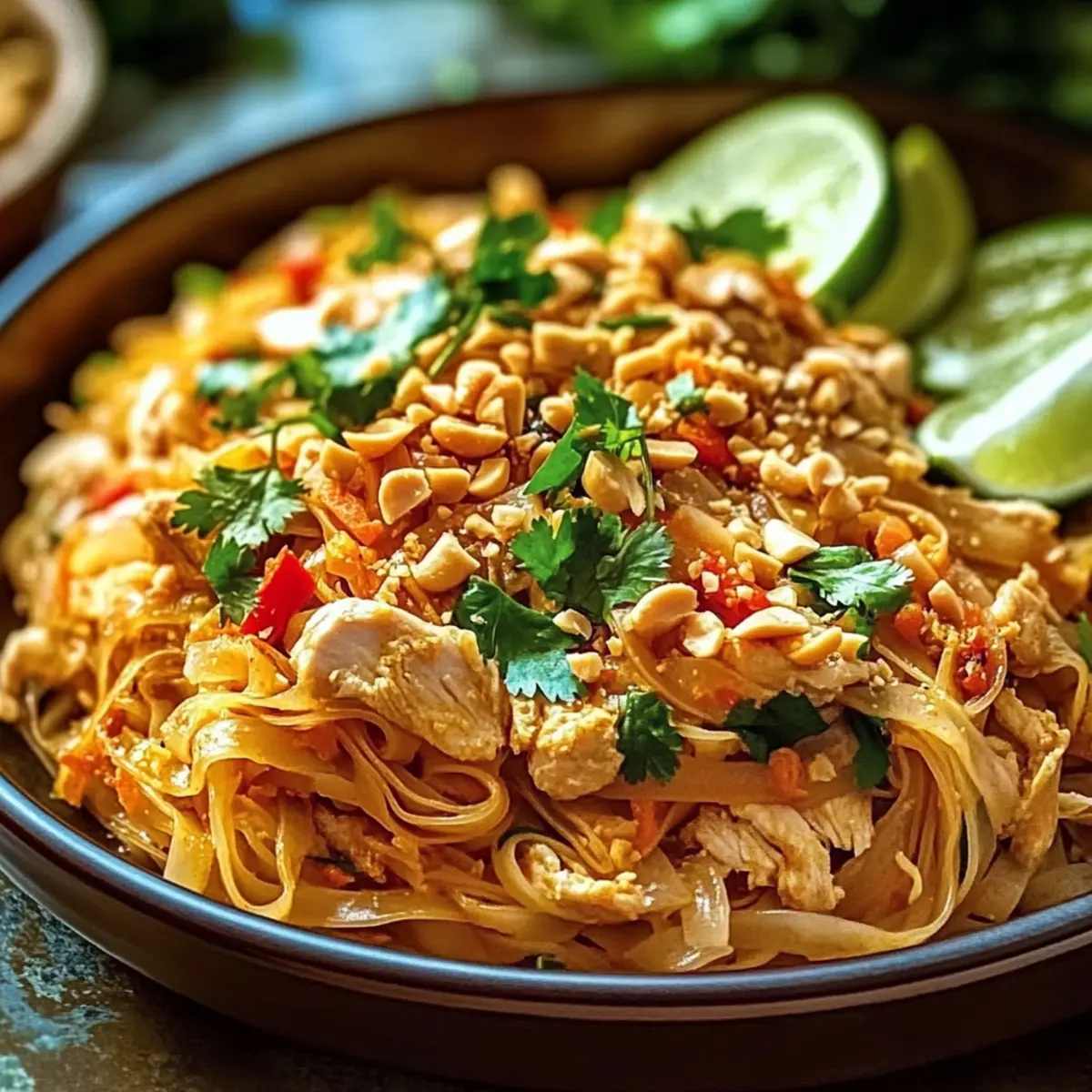
Why Is Chicken Pad Thai So Amazing?
Authentic Flavors: Immerse yourself in the sweet, tangy, and savory flavors that make Chicken Pad Thai a beloved dish.
Quick Weeknight Meal: This recipe comes together in under 30 minutes, perfect for busy evenings!
Customizable Ingredients: Choose your protein—be it chicken, shrimp, or tofu—tailoring it to your taste preferences easily.
Gluten-Free Option: With a simple swap to tamari, everyone can enjoy this traditional dish without worry.
Delightful Textures: The combination of chewy noodles and crunchy peanuts creates a satisfying contrast in every bite.
Crowd-Pleaser: Impress your family or guests with a restaurant-quality meal that feels special yet is deceptively simple!
Chicken Pad Thai Ingredients
For the Noodles
• Flat Rice Noodles – Ensure to use medium-width for that perfect texture. Look for “rice stick” or “Pad Thai noodles”.
For the Stir-Fry
• Vegetable Oil – This is your go-to cooking fat for stir-frying. Use any neutral oil; coconut oil adds a tropical twist.
• Garlic – An aromatic essential for flavor enhancement. Consider adding shallots for an extra touch of sweetness.
• Shallot – Sweetness and depth are brought to the dish by this ingredient. Red onion serves as a good substitute.
• Eggs – They contribute richness and protein to your meal. Omit for a vegan version or swap with scrambled tofu.
• Chicken Breast – Thinly sliced to allow for quick cooking. Feel free to replace with shrimp or tofu as desired.
For the Crunch
• Bean Sprouts – These add a delightful crunch and freshness. Feel free to substitute with shredded cabbage or other crunchy vegetables.
• Shredded Carrots – They bring both sweetness and vibrant color to your dish. Alternatives like bell peppers can also be incorporated.
• Green Onions – Perfect for garnish and a mild onion flavor. Chives or leeks work well in a pinch.
• Crushed Peanuts – Introduces a satisfying crunch and nuttiness. Consider almonds if you have a peanut allergy.
For the Sauce
• Tamarind Paste – Delivers that signature tangy flavor we cherish in Chicken Pad Thai. Lime juice and brown sugar can emulate its taste if needed.
• Fish Sauce – This ingredient brings umami and saltiness. Use gluten-free tamari for a vegetarian alternative.
• Soy Sauce – Perfect for enhancing umami notes. Those on a gluten-free diet can replace it with coconut aminos.
• Brown Sugar – Balances the flavors beautifully with its sweetness. Coconut sugar or maple syrup can be great substitutes.
• Chili Powder – Adds optional heat if you’re feeling adventurous. Fresh Thai chilies can elevate the spice level authentically.
• Lime – To brighten the dish’s overall flavor. Lemon can be used as an alternative in a pinch.
• Fresh Cilantro – Adds vibrant flavor as a garnish. Omit if you’re not a fan, or sprinkle some Thai basil instead.
Each ingredient plays a vital role in crafting your Chicken Pad Thai, transforming a simple meal into a burst of flavor and texture!
Step‑by‑Step Instructions for Chicken Pad Thai
Step 1: Soak the Noodles
Begin by soaking your flat rice noodles in room temperature water for 30 to 40 minutes, ensuring they become pliable but remain firm. You want them soft enough for stir-frying without getting mushy. Drain the noodles well and set them aside while you prep the other ingredients for your Chicken Pad Thai.
Step 2: Prepare the Sauce
In a medium bowl, whisk together tamarind paste, fish sauce, soy sauce, brown sugar, and chili powder. Take a moment to taste and adjust the flavors as needed to achieve the right balance of sweet and tangy. Once mixed, set your sauce aside to let those delicious flavors meld together.
Step 3: Cook the Chicken
Heat 1 tablespoon of vegetable oil in a large wok over medium-high heat. Once the oil shimmers, add the thinly sliced chicken breast and stir-fry it for about 5-7 minutes, or until it’s cooked through and no longer pink. Once done, remove the chicken from the wok and set it aside, keeping it warm.
Step 4: Sauté Aromatics
In the same wok, add additional oil if needed, then add minced garlic and shallots. Stir-fry for about 1-2 minutes until fragrant and slightly golden. Push the mixture to the side of the wok, then add the beaten eggs to the cleared space, scrambling them for about 1 minute until just set.
Step 5: Combine Noodles and Sauce
Add the drained, soaked noodles to the wok and pour in the sauce mixture. Toss everything gently to ensure the noodles are evenly coated in the sauce, cooking for about 2-3 minutes. Make sure to keep an eye on them, as you want the noodles to heat through without sticking together.
Step 6: Incorporate Chicken and Vegetables
Next, fold in the cooked chicken, bean sprouts, shredded carrots, and sliced green onions. Stir-fry everything together for an additional 2 minutes, allowing the vegetables to soften slightly and ensuring that all components of your Chicken Pad Thai are combined and heated through.
Step 7: Serve and Garnish
Once everything is cooked to perfection, serve your Chicken Pad Thai immediately while hot. Garnish with a generous sprinkle of crushed peanuts, fresh cilantro, and lime wedges on the side for that extra zesty kick. Enjoy this colorful and satisfying dish packed with authentic flavors!
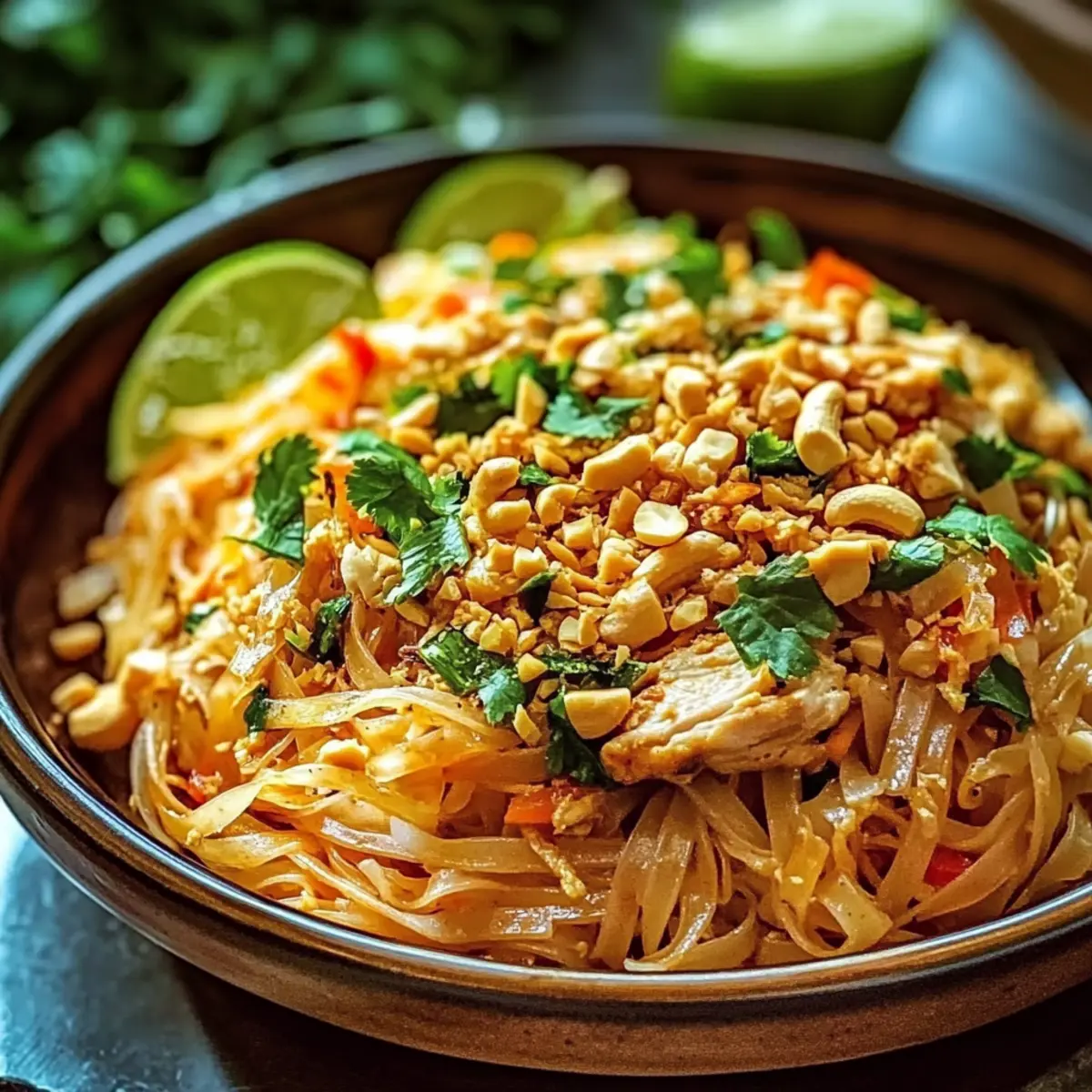
What to Serve with Chicken Pad Thai
Chicken Pad Thai is the perfect centerpiece for a delightful dinner that balances flavors and textures in every bite.
-
Crispy Spring Rolls: These fried delights offer a crunchy, savory bite that complements the tender noodles and freshness of the Pad Thai. The contrast of textures makes your meal even more satisfying.
-
Thai Green Salad: A light, zesty salad with fresh herbs and a tangy dressing provides a refreshing balance to the richness of the Chicken Pad Thai. It’s a great palate cleanser!
-
Coconut Rice: This mildly sweet and creamy rice dish enhances the savory notes of Pad Thai, adding a luxurious touch to your dining experience. Each mouthful transports you to tropical bliss.
-
Spicy Thai Basil Chicken: For lovers of heat, this aromatic dish brings a kick that harmonizes beautifully with the milder Pad Thai. It creates excitement and variety on your plate.
-
Mango Sticky Rice: An indulgent dessert, the sweet, sticky rice paired with luscious mango offers a delightful conclusion to the savory meal, balancing the flavors with sweetness.
-
Thai Iced Tea: The creamy, sweet notes of this refreshing beverage cool down the palate and provide a delightful contrast to the spices in the Chicken Pad Thai.
-
Lemongrass Infused Soup: A light, fragrant soup with lemongrass can awaken your taste buds and enhance the meal with its citrusy nuances, preparing your palate for the main event.
With these pairings, you’ll create an unforgettable dining experience around your Chicken Pad Thai!
How to Store and Freeze Chicken Pad Thai
Fridge: Store leftovers in an airtight container for up to 3 days to maintain freshness and flavor.
Freezer: Freeze Chicken Pad Thai in a freezer-safe container for up to 2 months. For best results, reheat from frozen to ensure even warming.
Reheating: When ready to enjoy, reheat in a pan over medium heat with a splash of water to prevent drying out, stirring occasionally until heated through.
Room Temperature: Avoid leaving Chicken Pad Thai at room temperature for more than 2 hours to ensure food safety.
Make Ahead Options
Preparing Chicken Pad Thai ahead of time is a fantastic way to save time on busy weeknights! You can soak the flat rice noodles up to 24 hours in advance; just drain and store them in an airtight container in the refrigerator. Additionally, you can prepare the sauce (tamarind paste, fish sauce, soy sauce, brown sugar, and chili powder) and refrigerate it for up to 3 days. To ensure your Chicken Pad Thai retains its quality, store the cooked chicken and vegetables separately from the noodles and sauce. When you’re ready to serve, simply heat the noodles and sauce in a wok, add the chicken, and stir-fry for a quick, delicious meal that’s just as flavorful as freshly made!
Chicken Pad Thai Variations & Substitutions
Feel free to get creative with your Chicken Pad Thai! You can mix and match ingredients to suit your taste and dietary preferences.
-
Protein Swaps: Opt for shrimp or tofu instead of chicken for a delightful twist. Each choice adds its own unique flavor and texture.
-
Gluten-Free Delight: Substitute traditional soy sauce with gluten-free tamari for a deliciously safe option without missing any of the traditional flavor.
-
Spicy Kick: Enhance the heat by adding fresh sliced Thai chilies or a sprinkle of chili flakes, perfect for those who love to turn up the spice!
-
Veggie Boost: Add bell peppers, snap peas, or broccoli for extra color and nutrients, elevating not only the dish’s visual appeal but also its health benefits.
-
Nut-Free Crunch: If you have a peanut allergy, try using crushed almonds or sunflower seeds for a nutty crunch without the worry of allergens.
-
Vegan-Friendly Option: Omit the eggs for a vegan version, or replace them with scrambled tofu for a protein-rich alternative that maintains a satisfying texture.
-
Zesty Additions: Add a splash of lime juice or a bit of lemon zest for a burst of fresh flavor that brightens up the entire dish.
For more delicious chicken variations, consider checking out my recipes for Chopped Chicken Bacon or Garlic Parmesan Chicken. Enjoy experimenting with these variations!
Expert Tips for Chicken Pad Thai
-
Noodle Soaking: Always soak the noodles in cool water, not hot; this prevents them from breaking apart during stir-frying.
-
Customize the Sauce: Don’t hesitate to tweak the sauce ingredients to suit your taste—add more sugar for sweetness or lime for tanginess in your Chicken Pad Thai.
-
Batch Cooking: If you’re doubling the recipe, cook in smaller batches. This ensures each noodle strand gets all the flavor without overcrowding the wok.
-
Quality Ingredients: Use high-quality tamarind paste and fish sauce for the best flavor in your Chicken Pad Thai; fresher ingredients make a noticeable difference.
-
Add Crunch: For extra texture, try incorporating additional vegetables like bell peppers or snow peas; they add both crunch and color to the dish.
-
Garnish for Flavor: Remember the garnishes! Fresh herbs and lime don’t just look pretty—they elevate the overall taste of your Chicken Pad Thai.
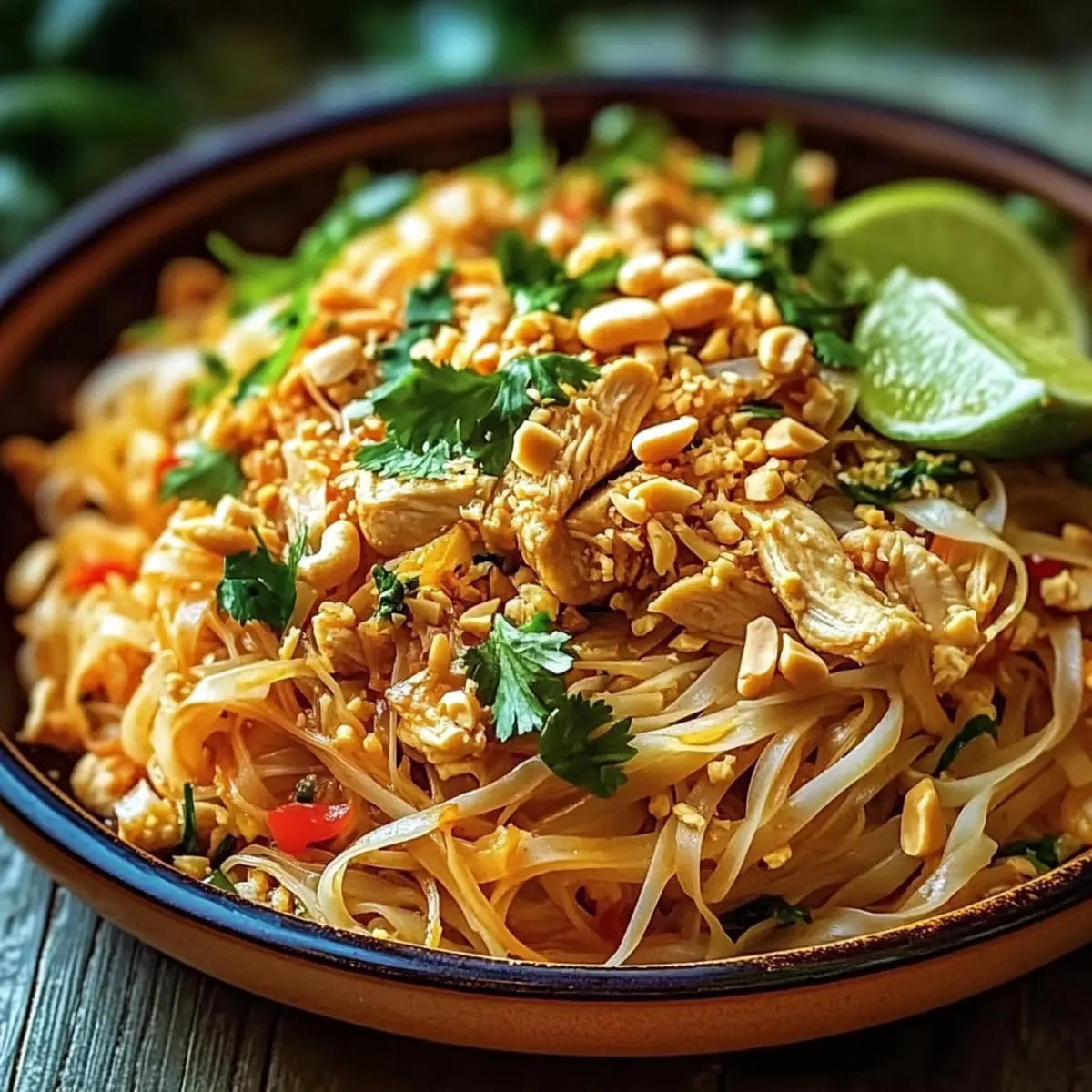
Chicken Pad Thai Recipe FAQs
How do I know if my rice noodles are the right texture?
Soak the flat rice noodles in room temperature water for 30 to 40 minutes until they’re pliable yet firm. You want to ensure that they’re soft enough to stir-fry without becoming mushy. If they’re too sticky, they’re likely over-soaked, which can affect the dish’s texture.
What is the best way to store leftover Chicken Pad Thai?
Store your Chicken Pad Thai in an airtight container in the fridge for up to 3 days. To keep it fresh, always allow it to cool down to room temperature before sealing. When reheating, add a splash of water to prevent the noodles from drying out.
Can I freeze Chicken Pad Thai?
Absolutely! You can freeze Chicken Pad Thai in a freezer-safe container for up to 2 months. For the best results, reheat it directly from frozen. Place it in a pan over medium heat, adding a splash of water, and stir occasionally to ensure even warming.
I’m allergic to peanuts. What can I use instead?
If you’re allergic to peanuts, you can substitute crushed almonds or simply omit the nuts entirely. The dish will still be delicious without them! For some added texture, consider using sunflower seeds as an alternative, generating a similar crunch.
What if my Pad Thai sauce is too sweet or too tangy?
Adjusting the sauce is quite simple! If it’s too sweet, add a splash of lime juice or more fish sauce to balance the flavors. For a tangy sauce, you can mix in a bit more brown sugar or tamari to mellow it out. Taste as you go to find that perfect balance!
Can pets eat Chicken Pad Thai?
It’s best to avoid feeding your pets any Chicken Pad Thai. Ingredients like garlic and onion can be harmful to pets. Stick to their regular diet and save the delicious Chicken Pad Thai for yourself!
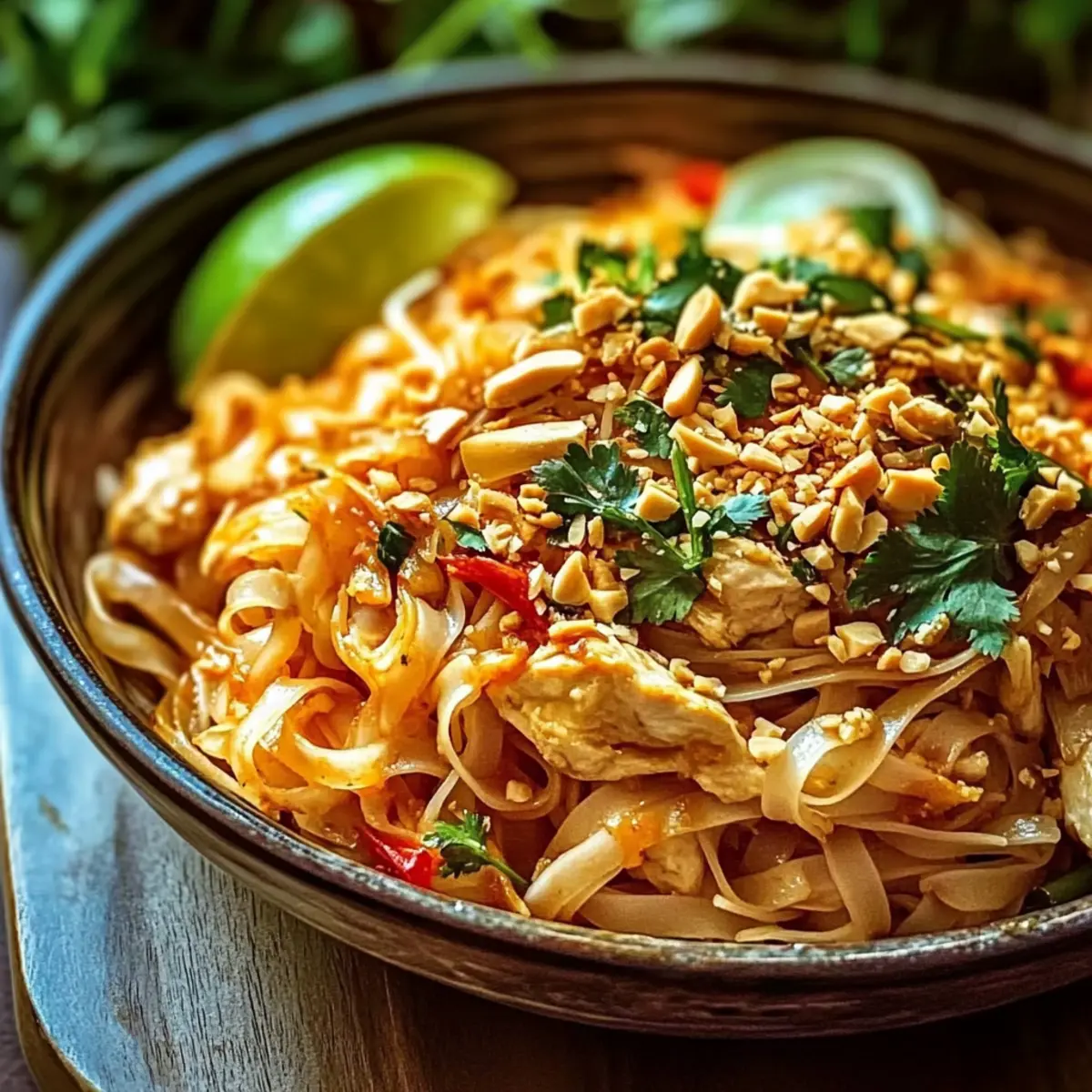
Quick & Easy Chicken Pad Thai for a Flavorful Dinner Adventure
Ingredients
Equipment
Method
- Soak the flat rice noodles in room temperature water for 30 to 40 minutes until pliable. Drain and set aside.
- In a bowl, whisk together tamarind paste, fish sauce, soy sauce, brown sugar, and chili powder. Set aside.
- Heat vegetable oil in a wok over medium-high heat, add chicken, and stir-fry for 5-7 minutes until cooked through. Remove and keep warm.
- In the same wok, add garlic and shallots and stir-fry for 1-2 minutes. Push to the side and scramble the beaten eggs.
- Add soaked noodles and the sauce mixture, tossing gently for 2-3 minutes until evenly coated and heated through.
- Fold in chicken, bean sprouts, carrots, and green onions, stir-frying for an additional 2 minutes.
- Serve hot, garnished with crushed peanuts, cilantro, and lime wedges.
Leave a Reply